
Salesforce Data Deduplication for B2B & SaaS Sales Teams
Bring consistency back to Salesforce. Detect duplicates early, align related records, and keep Leads, Contacts, Accounts, and Opportunities accurate—without disrupting your GTM flow.
- Built for fast, accurate Salesforce data clean up
- Designed to dedupe Salesforce data at scale
- Fully configurable rules to dedupe in Salesforce effortlessly
PROBLEM AWARENESS
Where Native Salesforce Deduplication Falls Short
Unlock the truth behind native Salesforce deduplication. Understand its limitations, avoid hidden data risks, and move forward with cleaner records that support consistent, scalable growth.
Manual by design
Salesforce data deduplication often requires manual review. Records must be merged repeatedly. This makes Salesforce data clean up difficult as volumes increase.
Shallow matching logic
Native Salesforce deduplication relies on limited rules. It catches obvious duplicates. Complex matches are often missed without advanced deduplication tools for Salesforce.
No real-time protection
Salesforce deduplication does not always work in real time. Duplicates can enter through imports and integrations before Salesforce data deduplication flags them.
Limited cross-object visibility
Salesforce deduplication works mostly within individual objects. Leads, Contacts, Accounts, and Opportunities remain disconnected during Salesforce data clean up.
Risk at scale
As data grows, Salesforce data deduplication can slow performance. Missed duplicates and incorrect merges become more likely.
Assess Your Salesforce Data Health with LeadAngel
Contact us to explore how LeadAngel improves match precision and sales focus

How It Works
How LeadAngel Powers Salesforce Deduplication Tools
LeadAngel goes beyond native rules. It acts as one of the most advanced deduplication tools for Salesforce, helping clean up Salesforce data before duplicates disrupt your workflows.
1
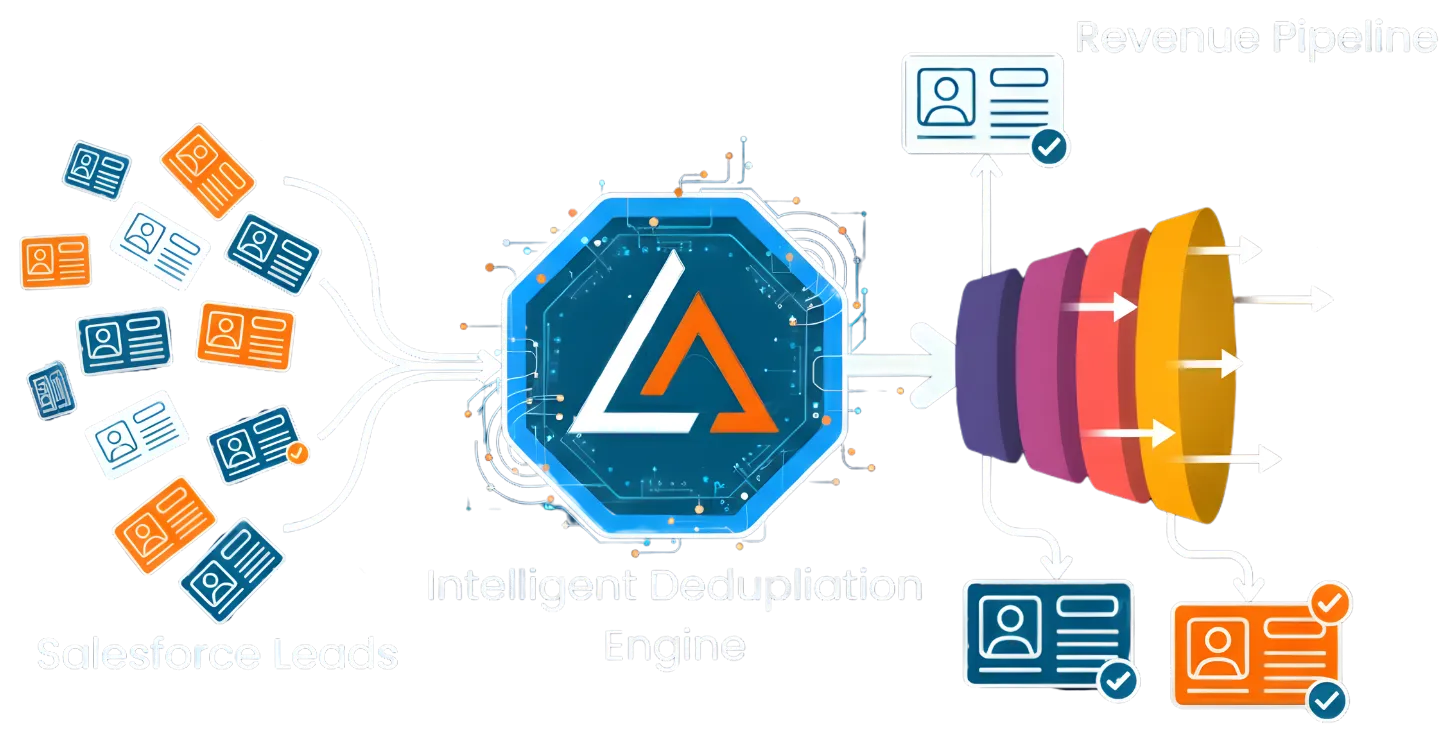
Data Enters Salesforce
Leads flow in from forms, integrations, imports, and campaigns. Data moves fast. Errors often follow.
2
Duplicates Are Identified
LeadAngel applies intelligent matching logic. Exact and fuzzy duplicates are detected across objects. This is Salesforce deduplication done right.
3
Clean Data Moves Forward
Records are merged or aligned automatically. Your Salesforce deduplication tools leave behind clean data—ready for routing, scheduling, and reporting.
Comparison
Why Salesforce Teams Choose LeadAngel for Data Deduplication
| Native Salesforce Deduplication | LeadAngel Data Deduplication |
|---|---|
| 1-layer matching rules | Multi-layer intelligent matching |
| Manual, record-level cleanup | Automated, workflow-driven resolution |
| Single-object deduplication scope | Cross-object duplicate resolution |
| Batch-only duplicate processing | Real-time duplicate prevention |
| Limited rule customization | Fully configurable matching logic |
| Import-time duplicate gaps | Continuous data-entry protection |
| Performance drops at scale | Built for high-volume data |
| High admin maintenance | Low-touch ongoing operations |
| Flat account structures | Complex B2B hierarchy support |
| Matches lead against leads only | Matches lead against lead as well as contact |
Read Our Blogs

Sales today isn’t just about reaching out; it’s about reaching the right prospects at the right time with the right

Leads are the foundation of every growing business. Why? Because speed matters, 78% of deals go to the first responder.

Bad B2B data isn’t just annoying.It’s expensive. It slows down sales.Confuses marketing.And quietly kills revenue. Which is why so many

You’ve explored plenty of tools before, and you know how overwhelming it feels to choose the right one (or even

We used to think our CRM issues were just part of the job: slow pipeline updates, missed follow-ups, and messy

Your round robin lead assignment system is not just a routing rule but a critical engine behind how your sales
Fequently asked questions

Start by identifying duplicate Leads, Contacts, Accounts, and Opportunities. Use matching rules to flag overlaps, then merge or correct records to maintain accuracy over time.
Cleaning CRM data in Salesforce involves standardizing fields, removing duplicates, validating required data, and applying rules that prevent bad data from entering the system.
Duplicates often come from multiple lead sources, imports, integrations, and manual entry—especially when real-time validation is missing.
Salesforce data cleanup should be ongoing. Regular audits combined with automated deduplication help prevent data quality issues from resurfacing.
Salesforce provides basic duplicate rules, but they rely on limited logic and manual review, which can allow duplicates to slip through.
The best approach is combining automation, advanced matching logic, and governance rules to keep Salesforce data clean as it scales.