
Bad B2B data isn’t just annoying.
It’s expensive.
It slows down sales.
Confuses marketing.
And quietly kills revenue.
Which is why so many B2B marketing teams struggle to hit targets, despite having plenty of leads, tools, and tech.
Sound familiar? You’re in the right place.
This article doesn’t throw a massive list of generic data tips at you.
Instead, we’ll walk you through proven B2B data management strategies that actually work.
11 best practices that are simple to implement, easy to maintain, and designed to scale.
The kind that keeps your data accurate, secure, and usable, so your sales and marketing teams can reach the right accounts, build stronger relationships, and drive real business growth.
What is B2B Data Management?
B2B data management is the process of gathering, organizing, and maintaining data specific to business-to-business interactions. This includes customer data, sales records, and other insights that help a company understand its clients and streamline sales and marketing operations.
A structured B2B data management strategy can support better decision-making, drive targeted marketing efforts, and improve customer experience.
Data management in a B2B setting involves multiple areas:
- Data collection – Gathering data from both internal and external sources.
- Data storage – Organizing and storing data in systems that are secure and accessible.
- Data quality – Ensuring data is accurate, up-to-date, and useful for analysis.
- Data analysis – Examining data to draw insights and make strategic decisions.
Why Is B2B Data Management Important?
Without reliable B2B data, even the best strategies fall apart.
With it, teams gain the clarity needed to act with confidence.
If your b2b data sources, marketing systems, and enterprise tools aren’t working in sync, everything downstream suffers. This section explains why data matters—not in theory, but in practice.
Each point highlights a different way data shapes real outcomes.
It Gives Businesses a Clear View of their market.
Without reliable data, companies operate in fragments—partial insights, incomplete signals, and assumptions filling the gaps.
High-quality B2B data brings those pieces together. It helps teams understand market movements, account behavior, and operational performance in a single connected view. With that visibility, decisions stop being reactive and start becoming intentional.
It Turns Planning into a Strategic Advantage
Growth doesn’t come from reacting faster.
It comes from preparing better.
When businesses analyze B2B data consistently, they can forecast demand, spot emerging opportunities, and plan with confidence. This allows leaders to invest resources where they’ll deliver the most value, rather than spreading efforts thin.
In manufacturing, for example, tracking cost trends and supply data helps adjust production schedules to reduce waste and protect margins.
It Makes Customer Engagement More Relevant
Generic messaging is a data problem.
Strong data allows businesses to understand who their customers are, how they operate, and what they’re likely to need next. With clearer customer profiles, teams can communicate with relevance instead of repetition.
That relevance builds trust. And in B2B, trust is what turns transactions into long-term relationships.
It Improves How Teams Learn from Interactions
Every customer interaction leaves a trail of insight.
By reviewing engagement signals—calls, conversations, and responses—businesses gain a deeper understanding of what resonates and where friction exists. These insights help refine messaging, improve outreach, and align strategies with how buyers actually think and decide.
It Helps Sales Focus on the Right Opportunities
Not all prospects deserve equal attention.
With access to accurate historical data, sales teams can identify which accounts are most likely to convert and tailor conversations around real business challenges. This approach replaces guesswork with context.
It’s no surprise that many B2B buyers say they prefer sales reps who understand their business, data is what makes that understanding possible.
It Supports Scalable Enterprise Data Management
As organizations grow, complexity grows faster.
Effective data management of enterprise systems ensures that insights remain accessible, consistent, and reliable across teams and tools. Instead of data becoming harder to manage at scale, it becomes more valuable.
This foundation allows businesses to personalize marketing, improve operations, and innovate with confidence—without losing control of their data ecosystem.
Best Practices for B2B Data Management
Effective B2B data management is not just about collecting data—it’s about ensuring that data is accurate, secure, organized, and actionable. Without the right approach, businesses often face challenges like data silos, outdated records, and a lack of insights.
Here are the most important data management best practices to help maintain clean, reliable, and high-performing B2B data:
🔹 1. Establish Strong Data Governance
Start with clear policies and processes that define how data is collected, stored, accessed, and used. Assign data ownership and responsibilities so every team follows consistent standards.
Strong governance ensures:
- Consistent data formats across teams
- Better compliance with regulations
- Improved data quality and accountability
🔹 2. Maintain Data Accuracy with Regular Audits
Outdated and incorrect data can lead to wasted sales and marketing efforts. Conduct regular audits to:
- Remove duplicate records
- Update outdated contact details
- Fix inconsistencies
Scheduling audits monthly or quarterly helps keep your database reliable and relevant.
🔹 3. Standardize Data Entry Across Teams
Inconsistent data entry is a major cause of messy data. Define clear standards for:
- Naming conventions
- Job titles
- Phone numbers and regions
When everyone follows the same format, it becomes easier to manage, segment, and analyze data.
🔹 4. Centralize Data in a Unified System
Fragmented data across departments leads to misalignment and missed opportunities. Use a centralized platform (like a CRM) to ensure:
- Real-time data updates
- A single source of truth
- Better collaboration between sales, marketing, and support
🔹 5. Use Automation for Data Cleansing and Management
Manual data handling is time-consuming and prone to errors. Automating key processes helps:
- Detect and remove duplicates
- Standardize data fields
- Fill in missing information
Tools like LeadAngel can automate data cleansing, routing, and lead-to-account matching, improving overall efficiency.
🔹 6. Implement Lead-to-Account Matching
Properly linking leads to the correct accounts reduces duplication and improves visibility across teams.
This ensures:
- Better account-based marketing (ABM)
- Clear tracking of customer interactions
- Improved sales alignment
🔹 7. Ensure Data Security and Compliance
Protecting customer data is critical. Implement strong security measures such as:
- Access control and permissions
- Data encryption
- Regular security audits
Also ensure compliance with regulations like GDPR to maintain trust and avoid legal risks.
🔹 8. Organize and Segment Data Effectively
Handling large volumes of unstructured data can be overwhelming. Segment your data based on:
- Industry
- Company size
- Buyer behavior
This makes it easier to target the right audience and improve campaign performance.
🔹 9. Leverage Data for Insights and Decision-Making
Data is only valuable when it drives action. Use analytics tools to:
- Identify high-quality leads
- Understand customer behavior
- Optimize sales and marketing strategies
Integrating analytics into your data processes ensures decisions are data-driven, not guesswork.
🔹 10. Train Teams and Build a Data-Driven Culture
Even the best tools won’t help if teams don’t follow best practices. Train employees on:
- Proper data entry
- Data usage guidelines
- Importance of data quality
Regular training ensures long-term consistency and accountability.
🔹 11. Schedule Continuous Data Refreshes
B2B data changes frequently: contacts switch jobs, companies evolve, and markets shift. Regularly refresh your data to:
- Keep contact details up to date
- Maintain relevance in outreach
- Improve engagement rates
B2B Go-to-Market Data Management Overview
This table summarizes the main data areas GTM teams rely on, what information is captured, how it supports revenue growth, and the most common data challenges teams face today.
| Data Area | Information Tracked | How It Supports GTM | Common Challenges (%) | Systems & Tools Used |
|---|---|---|---|---|
| ICP & Buyer Profile Data | • Market segment & industry type • Organization size & annual revenue • Buyer roles, titles & influencers • Core business problems & purchase signals | Helps teams focus on the right accounts and tailor messaging to the right audience. | • Incomplete account profiles – 57% • Profiles becoming outdated quickly – 51% | CRMs (Salesforce, HubSpot), enrichment platforms (LeadAngel, ZoomInfo, Cognism) |
| Engagement & Intent Signals | • Website visits and content activity • Product demos and trial sign-ups • Email, call, and social touchpoints | Surfaces active buyers and enables faster, better-timed sales follow-ups. | • Signals spread across multiple tools – 62% • Difficulty scoring intent accurately – 48% | Analytics tools, CDPs, intent data providers (Bombora, Demandbase) |
| Sales Execution & Pipeline Data | • Lead origin and status • Deal stage, size, and movement • Win, loss, and churn trends | Measures GTM effectiveness and guides budget and strategy decisions. | • Duplicate and mismatched records – 60% • Weak lead-to-account alignment – 55% | CRM platforms (Salesforce, Zoho, Pipedrive) |
| Revenue & Performance Metrics | • Cost to acquire customers (CAC) • Customer lifetime value (LTV) • MQL, SQL, and conversion rates• Channel ROI | Measures GTM effectiveness and guides budget and strategy decisions. | • Disconnected reporting across teams – 58% • Lack of real-time insights – 46% | BI tools, analytics platforms, reporting dashboards |
| Data Quality & Governance | • Accuracy and completeness checks • Field definitions and standards • Compliance and consent records | Ensures data reliability and supports scalable automation across GTM systems. | • Disconnected reporting across teams – 58% • Lack of real-time insights – 46% | Data governance tools, CRM administration frameworks |
Data Management Software for B2B SaaS Companies
Data management tools for b2b companies that help collect, enrich, manage, and activate customer data across the revenue lifecycle.
Here’s a clean, compact comparison table
| Tool | Category | Data Source | Key Strength | Automation | CRM Sync | Best For | Pricing |
|---|---|---|---|---|---|---|---|
| LeadAngel | Data Ops | CRM Data | Smart Routing | Advanced | Native Sync | RevOps Teams | Custom Plan |
| LinkedIn Sales Navigator | Data Intel | LinkedIn Data | Accurate Profiles | Limited | CRM Sync | Prospecting | Monthly Plan |
| Apollo.io | Data Platform | Own Database | All-in-One | Moderate | CRM Sync | Startups SMB | Freemium Plan |
| ZoomInfo | Data Platform | Large Database | Intent Data | Advanced | Native Sync | Enterprise Sales | High Cost |
| Leadinfo | Data Capture | Website Traffic | Visitor ID | Moderate | CRM Sync | Inbound Teams | Tiered Plan |
Data Management & Routing
1. LeadAngel
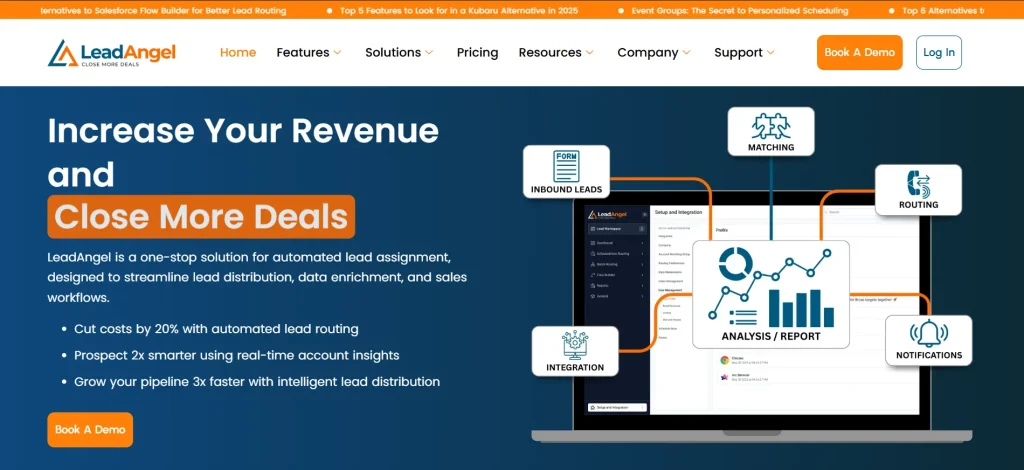
LeadAngel is a B2B data management and revenue operations platform designed to help organizations clean, organize, match, and route data efficiently within their CRM ecosystem.
Unlike traditional data providers, LeadAngel focuses on the data operations layer, ensuring that incoming data is accurate, deduplicated, properly matched to accounts, and instantly routed to the right teams.
It plays a critical role in helping businesses turn fragmented and messy data into a structured, actionable, and revenue-ready system.
Key Features
- Lead-to-Account Matching- Automatically matches incoming leads to the correct accounts using logic like domain, company name, and custom rules, ensuring accurate account visibility.
- Advanced Data Deduplication & Cleansing- Identifies and removes duplicate leads, contacts, and accounts while standardizing data formats to maintain clean CRM records.
- Real-Time Lead Routing & Distribution- Instantly assigns leads to the right sales reps based on territory, round-robin, account ownership, or custom rules.
- Data Standardization & Normalization- Ensures consistent formatting across fields like company names, job titles, and regions, improving segmentation and reporting.
- Workflow Automation & SLA Management- Automates processes such as lead assignment, escalation, and follow-ups to ensure no lead is missed or delayed.
- CRM & Tech Stack Integration- Seamlessly integrates with platforms like Salesforce and HubSpot, enabling smooth data flow across systems.
- Lead Management & Scheduling- Supports meeting scheduling and handoffs, ensuring a seamless transition from lead capture to sales engagement.
Pros
- Strong focus on data accuracy and hygiene (deduplication + matching)
- Highly customizable routing and workflow logic
- Enables real-time data processing and action
- Improves alignment between sales, marketing, and operations
- Works within existing CRM systems, enhancing not replacing them
Cons
- Occasional glitches – Minor system bugs.
- Requires proper configuration to fully leverage advanced features
Pricing
- Custom pricing based on features and scale (Professional / Enterprise tiers)
- Add-ons available for advanced routing, scheduling, and data management capabilities
Use Cases
- Lead Routing at Scale → Automatically distribute high volumes of inbound leads
- Account-Based Marketing (ABM) → Ensure leads are mapped to the right accounts
- CRM Data Cleanup & Management → Maintain accurate, duplicate-free records
- Revenue Operations (RevOps) → Align sales, marketing, and operations with clean data workflows
- Speed-to-Lead Optimization → Reduce response time with real-time routing
How LeadAngel Helps Manage B2B Data
LeadAngel strengthens B2B data management by operating at the data control and execution layer:
- Data Quality Control → Cleans, deduplicates, and standardizes incoming data
- Data Structuring → Matches leads to accounts for a unified customer view
- Data Distribution → Routes data to the right teams instantly
- Data Activation → Ensures data is immediately actionable within workflows
Data Acquisition & Intelligence Tools
2. LinkedIn Sales Navigator
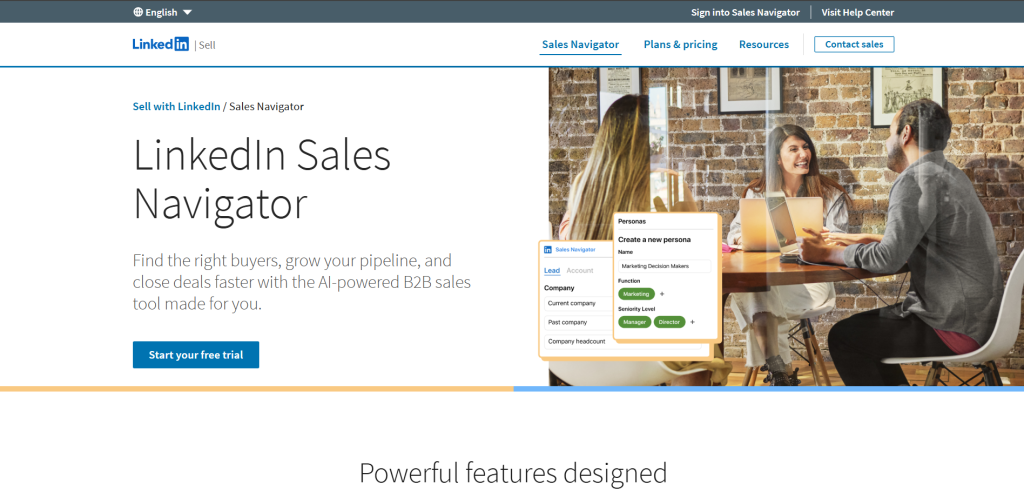
A B2B data intelligence tool built on LinkedIn’s network—used for prospecting, data tracking, and relationship management.
Key Features
- Access to LinkedIn’s professional database
- Advanced lead & account search filters
- Real-time job/company updates
- CRM sync (Salesforce, HubSpot)
- Lead recommendations (AI-driven)
- InMail messaging
Pros
- Most accurate & up-to-date professional data
- Strong intent signals (job change, activity)
- Great for outbound prospecting
Cons
- No direct email/phone export (limited data ownership)
- Not a full data enrichment tool
- Limited automation
Pricing
- Starts approx. ~$99/month (varies by region/plan)
Use Cases
- SDR outbound prospecting
- Account research & tracking
- Social selling strategies
3. Apollo.io
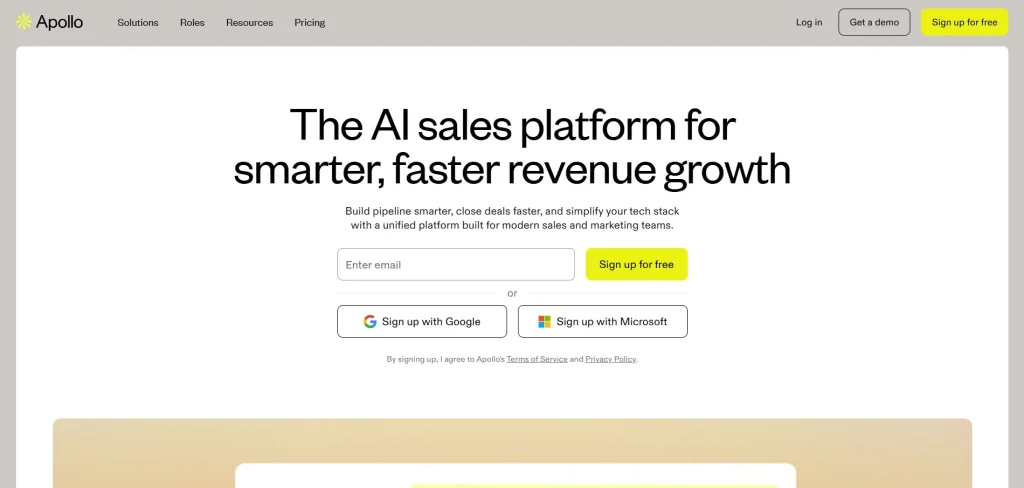
Apollo is an all-in-one B2B data platform combining database + enrichment + outreach + analytics.
Key Features
- 200M+ contact database
- Email & phone enrichment
- Sales engagement (email sequences)
- Chrome extension for prospecting
- CRM integrations
- Analytics & reporting
Pros
- Affordable compared to competitors
- Combines data + outreach
- Free plan available
- Easy to use
Cons
- Data accuracy can vary (especially emails)
- Credit-based limits
- Not as deep in data governance as LeadAngel
Pricing
- Free plan available
- Paid plans start ~$49/month (scales with usage) (industry typical)
Real user sentiment (Reddit):
“Pricing starts reasonable… but scales up quickly… accuracy ~65–70%.”
Use Cases
- Startups doing outbound sales
- Cold email campaigns
- Budget-friendly enrichment + prospecting
4. ZoomInfo
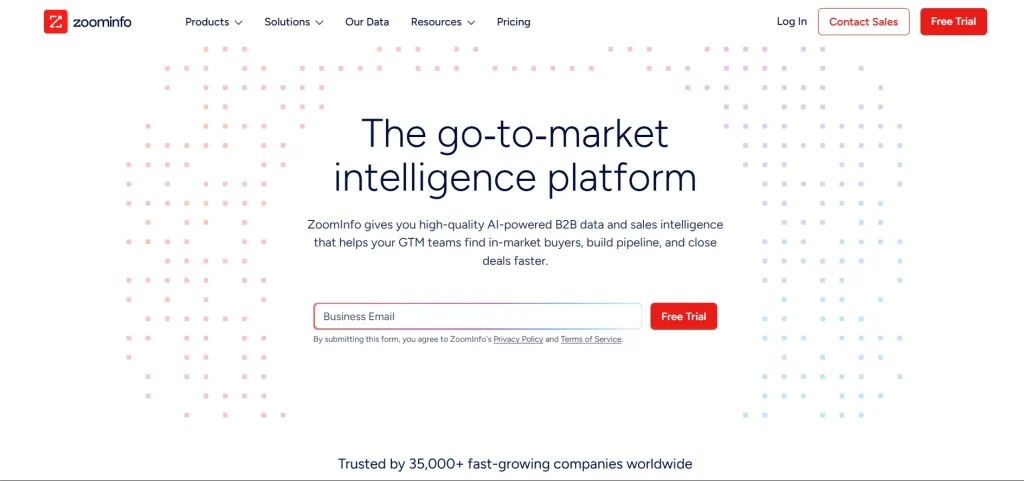
ZoomInfo is an enterprise-grade B2B data management platform with a massive contact database + intent data + enrichment.
Key Features
- Extensive B2B contact & company database
- Intent data (buyer signals)
- Data enrichment & cleansing
- Workflow automation
- Advanced analytics & segmentation
- CRM + marketing integrations
Pros
- One of the largest B2B databases
- Strong enrichment capabilities
- Enterprise-level insights & intent data
Cons
- Very expensive
- Pricing not transparent
- Data can still become outdated
Real user sentiment (Reddit):
“ZoomInfo pricing is… $15k+ annually”
Pricing
- Custom enterprise pricing (often $10K–$30K/year+)
Use Cases
- Enterprise sales teams
- ABM campaigns with intent data
- Large-scale data enrichment
Data Capture & Enrichment
5. Leadinfo
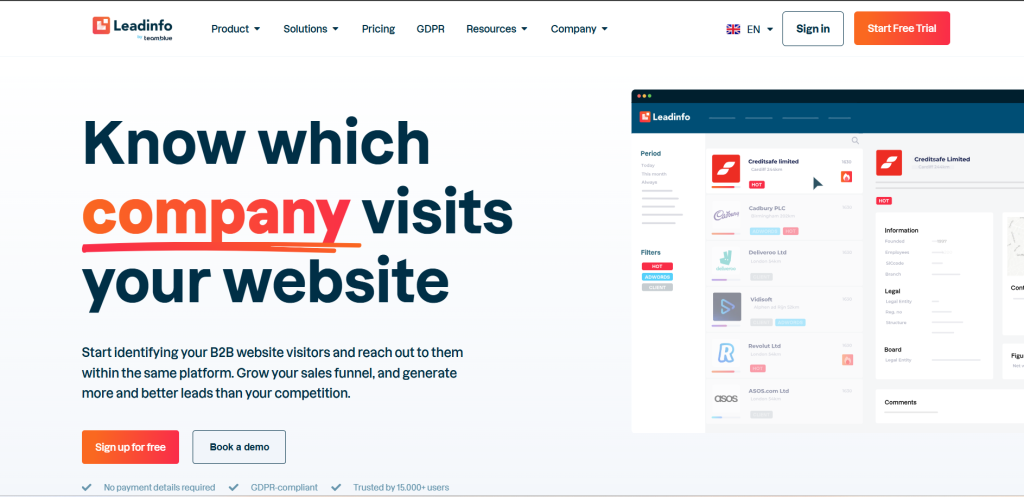
Leadinfo focuses on anonymous website visitor identification + enrichment, turning traffic into usable B2B data.
Key Features
- Identify anonymous website visitors
- Company-level data + decision-makers
- Automated lead scoring
- CRM integrations (67+ tools)
- Behavior tracking (pages visited)
- LinkedIn + contact enrichment
Pros
- Converts website traffic into leads
- Strong automation + scoring
- Easy to implement
Cons
- Limited to inbound traffic
- Not a full outbound database
- Data depends on website volume
Pricing
- Starter: ~€69/month
- Scale: ~€159/month
- Pro: ~€359/month
Use Cases
- Website lead generation
- Marketing + sales alignment
- Identifying anonymous visitors
Turning Clean Data Into Confidence
Messy data creates a quiet kind of frustration.
You feel it when reports don’t line up. When leads slip through the cracks. When teams question the numbers instead of acting on them.
That’s where a strong B2B data management service provider changes everything.
When data stays accurate and connected, decision-making feels lighter. Lead targeting becomes sharper. Customer relationships grow stronger because every interaction is informed, not improvised.
Data management tools that support automated lead-to-account matching, data validation, and CRM alignment remove the constant worry of “Is this data even right?” They replace apprehension with confidence, and manual cleanup with momentum.
If your sales and marketing teams are ready for relief from data chaos, it may be time to rethink how your data is managed. Clean, dependable data doesn’t just support growth, it makes growth feel achievable again.
See How LeadAngel Can Transform Your Lead Management
Curious to experience the power of LeadAngel firsthand? We understand!
We're offering a complimentary trial so you can explore LeadAngel's features at your own pace. Once you request a free trial, we'll schedule a personalized onboarding session to ensure you maximize the value of LeadAngel.
Ready to take your lead management strategy to the next level? Request your LeadAngel trial today!
In addition to exploring the platform, we recommend visiting our LeadAngel Help Center for in-depth guidance. Our dedicated customer support team is also available to answer any questions you may have at sales@leadangel.com.
FAQs
A B2B data management platform collects data from multiple sources like your CRM, forms, and tools such as Apollo.io or ZoomInfo. It then cleans and standardizes the data, enriches it with missing details, and routes it to the right sales reps using tools like LeadAngel. This ensures your data is accurate, complete, and actionable.
Data management removes duplicates, fixes errors, and ensures leads are assigned instantly. This means sales reps spend less time fixing data and more time selling. Faster lead response and better targeting directly improve productivity and deal velocity.
Every team: sales, marketing, and leadership, relies on data to make decisions. Poor data leads to wrong insights, wasted effort, and missed opportunities. Good data management ensures accuracy, alignment, and predictable growth.
It improves lead generation by enriching and qualifying data, and conversion by ensuring fast, accurate follow-ups. Tools like Leadinfo even help capture anonymous visitors, turning more traffic into leads. Better data leads to better targeting and higher conversions.
The Rule of 7 means a prospect typically needs at least seven interactions with your brand before taking action. These touchpoints can include emails, ads, or platforms like LinkedIn Sales Navigator. Data management helps track and optimize these interactions for better engagement.
The 5 C’s are Collection, Cleaning, Classification, Consistency, and Compliance. Together, they ensure your data is accurate, organized, standardized, and legally compliant. Missing any one of these can reduce data effectiveness.
These tools automate data processes like enrichment, routing, and deduplication. They keep your CRM clean, improve lead quality, and align sales and marketing teams. The result is faster execution and better ROI.
Start by identifying your main problem, whether it’s messy CRM data, lack of leads, or poor conversion. Then evaluate tools based on data accuracy, integrations, automation, and scalability. For example, LeadAngel is ideal for routing and data operations, while tools like Apollo.io focus on data acquisition.

