
We used to think our CRM issues were just part of the job: slow pipeline updates, missed follow-ups, and messy contact data.
But the real problem? It wasn’t the CRM. The system around it was the lack of proper sales operation management. And here’s the uncomfortable truth most sales leaders won’t say out loud:

And honestly, we were skeptical at first.
Another promise of “automation”?
Another set of Sales Operations tools claiming to fix everything?
Your sales reps are spending more time managing your CRM than actually selling.
Sounds too good to be true.
But here’s the reality: teams don’t adopt sales operations software because they want to. They do it when manual processes start costing them deals.
That’s when the shift happens, from managing leads to building a system that manages them for you.
Let’s take Activision, for example.
Activision: Increasing Sales Effectiveness
About this company: Activision is a global leader in gaming, known for Call of Duty.
At their scale, manual workflows weren’t an option. By leveraging the right Sales Operations Software, they streamlined processes and improved sales efficiency.
So before you assume your CRM is the problem, ask yourself, are you missing the system behind it?
To help you avoid that mistake, we’ve evaluated and ranked the 8 best sales operation tools trusted by enterprise teams—tools that automate your CRM workflows, eliminate manual busywork, and give your reps back the hours they need to actually close deals.
What Are Sales Operations Tools?
Sales operations tools are systems that support sales operations management. They’re purpose-built software systems thatstreamline the sales operation process, data, and workflows that keep your pipeline moving without relying on manual effort. They handle everything your sales team shouldn’t have to think about: automated lead assignment, deal tracking, pipeline reporting, territory management, and CRM data hygiene.
In B2B sales operations, these tools bring structure to complex sales cycles. They improve data accuracy. They help teams scale and close deals more efficiently. Businesses that implement CRM and sales operations solutions see an average 29% increase in sales revenue and a 34% boost in sales productivity. Top-performing sales reps are 53% more confident in their CRM data than average performers
Why Enterprise Sales Teams Need Dedicated Sales Operations Tools
Much like most sales teams today, sales operations feel busy all the time. Only, it’s not the kind of busy that moves things forward. It’s the kind where everyone is working, but no one is fully sure what’s actually working.
Sales operations is like trying to run a well-oiled machine, except the data lives in different places, the tools don’t talk, and someone is still updating forecasts in Excel at midnight. Follow-ups slip. Outreach happens in silos. And reps spend more time managing work than doing it.
Revenue pressure shows up every quarter (and somehow feels heavier each time), so teams keep pushing harder. But effort isn’t the problem. Clarity is. And without it, even the best teams feel stuck. Most enterprises are operating with CRM duplicate rates between 20% and 30%, treating data quality as a technical inconvenience rather than a strategic priority.
And even though the goal is always the same—predictable revenue, faster cycles, full visibility—there’s just something off about how most systems are built. It’s all dashboards and reports, but not enough direction.
At least, that’s how it feels for a lot of teams right now.
But this is where things start to shift. 2026 isn’t about doing more with less. It’s about doing it better with less manual work, cleaner data, and tools that actually connect. Decisions that happen faster.
Because sales operations are only as effective as the system behind them.
So yeah, it’s probably time to fix the system.
8 Best Sales Operations Tools for Enterprise Teams
Choosing the right tools for your sales operations sounds like a simple decision. Only, it’s usually not. There are too many options, too many promises, and not enough clarity on what actually fixes your workflow.
The right tools aren’t just “nice to have.” They’re the ones that cast off bottlenecks, automate the repetitive stuff, and give you real-time insights without making you dig for them.
So, Instead of including extra tools on your stack, be aware of those that sincerely make your machine work.
The sales operation platforms below do exactly that.
Before You Pick a Tool, Read This Comparison of 8
| Tool | What It Does | Strengths | Considerations | Pricing |
|---|---|---|---|---|
| LeadAngel | Fixes lead routing and ownership issues by automating assignment and matching leads to accounts in real time | • Rule-based routing • Eliminates duplicates • Real-time assignment • Deep CRM integration | • Needs clear routing logic • Setup can be complex | custom enterprise pricing |
| Salesforce | Acts as the central system for managing customer data, deals, and workflows across the entire sales process | • Highly customizable • Strong reporting • Huge ecosystem | • Complex setup • Expensive at scale | $25–$350/user/month |
| HubSpot | Combines CRM, marketing, and automation to align teams and simplify operations | • Easy to use • Quick setup • Marketing + sales alignment | • Limited customization • Costs increase with growth | Free – $800+/month |
| Gong | Analyzes sales conversations to provide insights into deal health and team performance | • AI-driven insights • Better forecasting • Risk detection | • Needs large data volume • Premium pricing | $100–$200/user/month |
| Outreach | Automates prospecting and follow-ups across multiple channels | • Automated outreach • Multi-channel • Strong tracking | • Learning curve • Heavy for small teams | $100–$150/user/month |
| Salesloft | Standardizes outreach workflows and tracks sales activities for consistency | • Structured workflows • Performance insights • CRM sync | • Overlaps with Outreach • Needs additional tools | $75–$125/user/month |
| Tableau | Turns sales data into visual dashboards for better decision-making | • Powerful dashboards • Handles large data • Custom reports | • Requires expertise • Not a CRM tool | Starts at $70/user/month |
| Xactly | Automates commission and incentive management for sales teams | • Accurate payouts • Reduces errors • Scalable | • Niche use case • Needs CRM integration | $20–$40/user/month |
1. LeadAngel
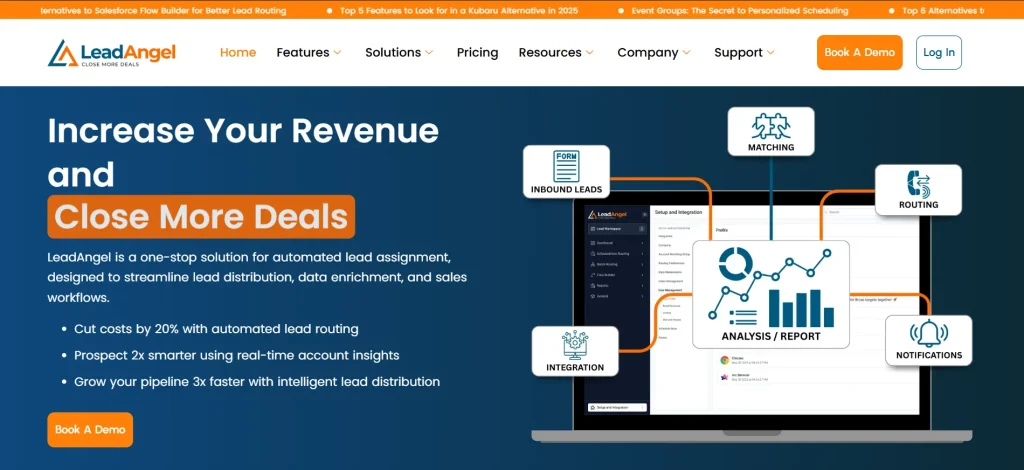
LeadAngel is built to fix one core problem: lead routing. It ensures every lead goes to the right owner instantly. No delays. No confusion. No manual effort. The sales operations platform matches incoming leads with existing accounts in real time. It uses rules based on territory, ownership, and custom logic. This removes duplicates and avoids routing conflicts.
LeadAngel works directly inside CRMs. It automates lead assignment and triggers workflows automatically. No need for manual lead distribution. It also improves data quality. Leads are matched correctly. Duplicate records are identified and reduced.
Teams get clear ownership across the entire sales operation process. Sales, marketing, and revenue operations stay aligned. For growing and enterprise teams, this means faster response times. Better conversions. And a system that actually scales.
Key Features
- Advanced Lead Routing: Automatically assign leads based on territory, account ownership, or custom rules
- Lead-to-Account Matching: Match incoming leads to existing accounts to avoid duplication
- Territory Management: Define and manage complex sales territories with precision
- Data Deduplication: Identify and merge duplicate leads and contacts
- Real-Time Assignment: Route leads instantly to reduce response time
- CRM Integration: Native integration with Salesforce for seamless workflow automation
Best for
Lead routing, lead-to-account matching, ownership management, and enterprise sales operations.
Strengths
- Advanced rule-based and territory-based routing
- Real-time lead assignment
- Eliminates duplicate and misrouted leads
- Deep CRM integration (especially Salesforce)
Considerations
- Needs clearly defined routing logic
- Setup may take time for complex teams
Pricing
- Custom enterprise pricing
2. Salesforce
Salesforce acts as the backbone of most B2B sales operations. It centralizes customer data, tracks deals, and supports automation across the entire sales operation process. Most other tools in your stack will connect back to Salesforce.
Key Features
- Pipeline Management: Track opportunities across every stage of the sales cycle
- Workflow Automation: Automate tasks, approvals, and follow-ups
- Custom Objects & Fields: Tailor the CRM to fit any sales operation process
- Forecasting Tools: Predict revenue with AI-powered insights
- AppExchange Ecosystem: Extend functionality with thousands of integrations
- Reporting Dashboards: Build real-time performance and pipeline reports
Best for
End-to-end CRM and enterprise sales operations.
Strengths
- Highly customizable workflows
- Strong reporting and forecasting
- Massive integration ecosystem
Considerations
- Complex setup and maintenance
- Costs increase with scale
Pricing
- Starter: $25/user/month
- Professional: $100/user/month
- Enterprise: $175/user/month
- Unlimited: $350/user/month
3. HubSpot
HubSpot simplifies sales operation management by combining CRM, marketing, and automation into one sales operation platform. It’s especially useful for teams that want alignment between marketing and sales without heavy technical setup.
Key Features
- Unified CRM Platform: Combine sales, marketing, and service data in one place
- Marketing Automation: Automate email campaigns and lead nurturing
- Lead Tracking: Monitor prospect behavior across channels
- Email & Sequence Automation: Send personalized follow-ups at scale
- Pipeline Visualization: Visual deal tracking with drag-and-drop interface
- Built-in Analytics: Track campaign and sales performance easily
Best for
Growing teams needing an all-in-one sales operation solution.
Strengths
- Easy to use and quick to implement
- Built-in marketing automation
- Unified view of leads and customers
Considerations
- Limited customization at scale
- Pricing increases as you grow
Pricing
- Free CRM available
- Starter: $20–$90/month
- Professional: $800+/month
4. Gong
Gong adds intelligence to your sales operation process by analyzing conversations. It helps teams understand what’s working in deals and where things are going wrong, using real data instead of assumptions.
Key Features
- Conversation Intelligence: Analyze calls, emails, and meetings using AI
- Deal Risk Alerts: Identify at-risk deals before they fall through
- Call Recording & Transcription: Capture and review every interaction
- Coaching Insights: Highlight winning behaviors for sales teams
- Pipeline Visibility: Track deal progress and engagement signals
- Forecast Intelligence: Improve accuracy with data-backed insights
Best for
Deal intelligence and sales coaching.
Strengths
- AI-driven insights from calls and emails
- Identifies deal risks early
- Improves forecasting accuracy
Considerations
- Requires large data volume
- Higher cost
Pricing
- Around $100–$200/user/month
- Custom enterprise pricing
5. Outreach
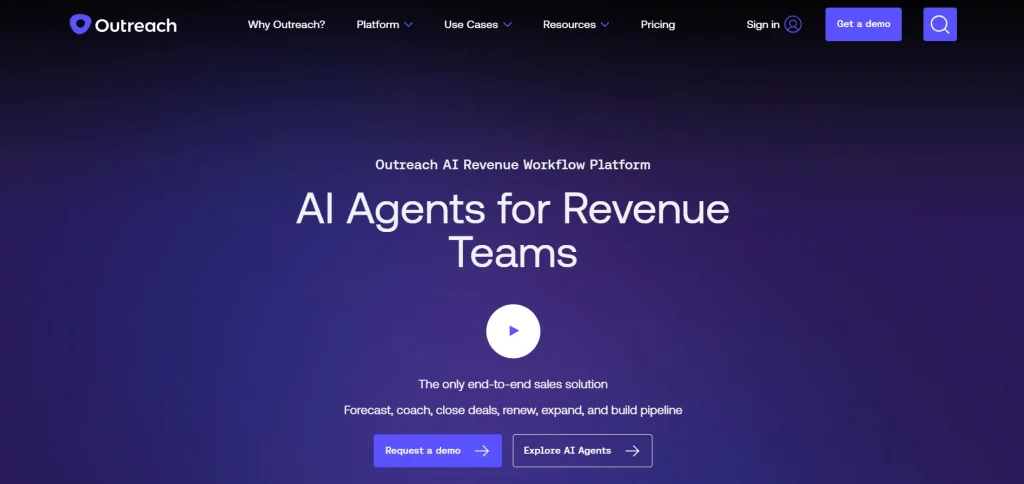
Outreach structures how sales reps engage with prospects. It automates follow-ups and ensures no lead is forgotten, which is critical in fast-moving B2B sales operations.
Key Features
- Multi-Channel Sequences: Automate outreach across email, calls, and social
- Task Automation: Schedule and manage daily sales activities
- Engagement Tracking: Measure opens, clicks, and responses
- Sales Analytics: Track performance across reps and campaigns
- CRM Sync: Bi-directional sync with Salesforce and other CRMs
- AI Recommendations: Optimize outreach timing and messaging
Best for
Sales engagement and prospecting workflows.
Strengths
- Multi-channel outreach (email, calls, social)
- Automated sequences
- Engagement tracking
Considerations
- Learning curve for teams
- Can be heavy for small teams
Pricing
- Around $100–$150/user/month
- Custom pricing
6. Salesloft
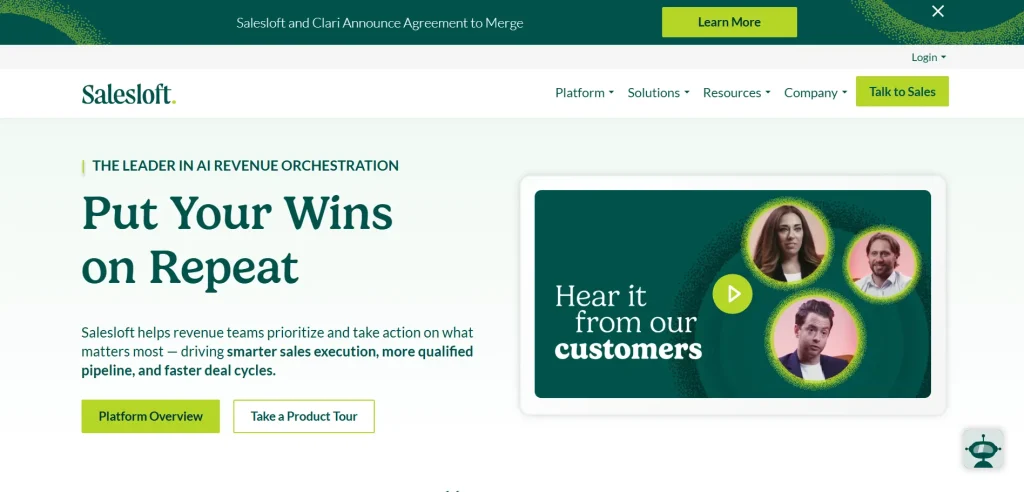
Salesloft helps standardize outreach in your sales operation process. It ensures every rep follows a consistent approach, which improves performance tracking and overall efficiency.
Key Features
- Cadence Management: Standardize outreach workflows across teams
- Activity Tracking: Monitor calls, emails, and meetings in one place
- Conversation Insights: Analyze interactions for performance improvement
- Pipeline Visibility: Get real-time updates on deal progress
- Coaching Tools: Provide feedback based on rep activity
- CRM Integration: Sync data seamlessly with CRM systems
Best for
Sales engagement and activity tracking.
Strengths
- Structured cadence workflows
- Performance insights
- CRM integrations
Considerations
- Overlaps with Outreach
- Needs other tools for full functionality
Pricing
- Around $75–$125/user/month
- Enterprise pricing available
7. Tableau
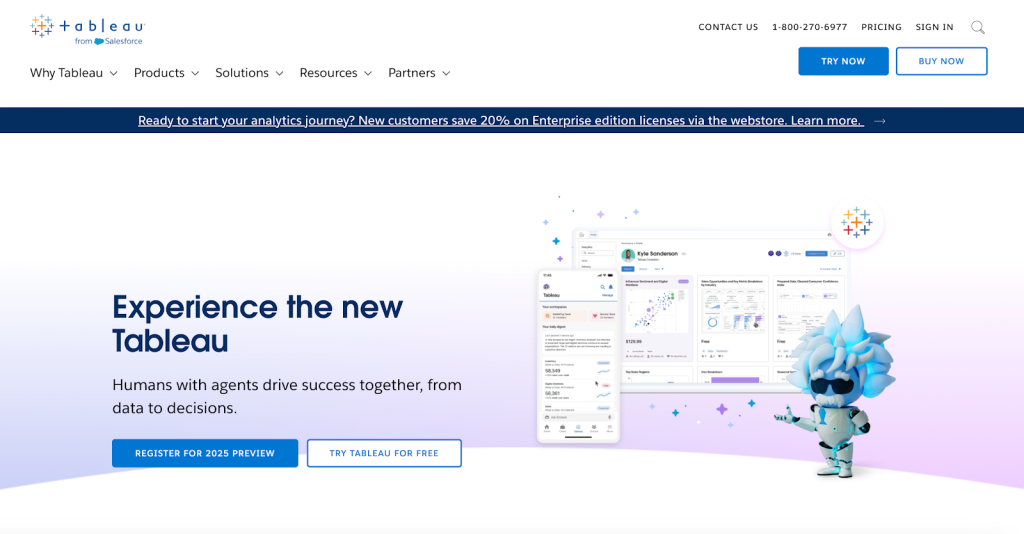
Tableau brings visibility into your sales operation strategy by turning raw data into actionable insights. It helps leadership understand pipeline health, performance trends, and future forecasts.
Key Features
- Data Visualization: Turn complex data into interactive dashboards
- Real-Time Analytics: Monitor sales performance as it happens
- Data Blending: Combine data from multiple sources
- Custom Dashboards: Build tailored reports for different teams
- Forecast Modeling: Analyze trends and predict outcomes
- Scalable Architecture: Handle large enterprise datasets
Best for
Analytics and performance dashboards.
Strengths
- Advanced data visualization
- Handles large datasets
- Custom dashboards
Considerations
- Requires technical expertise
- Not a CRM or engagement tool
Pricing
- Starts at $70/user/month
8. Xactly
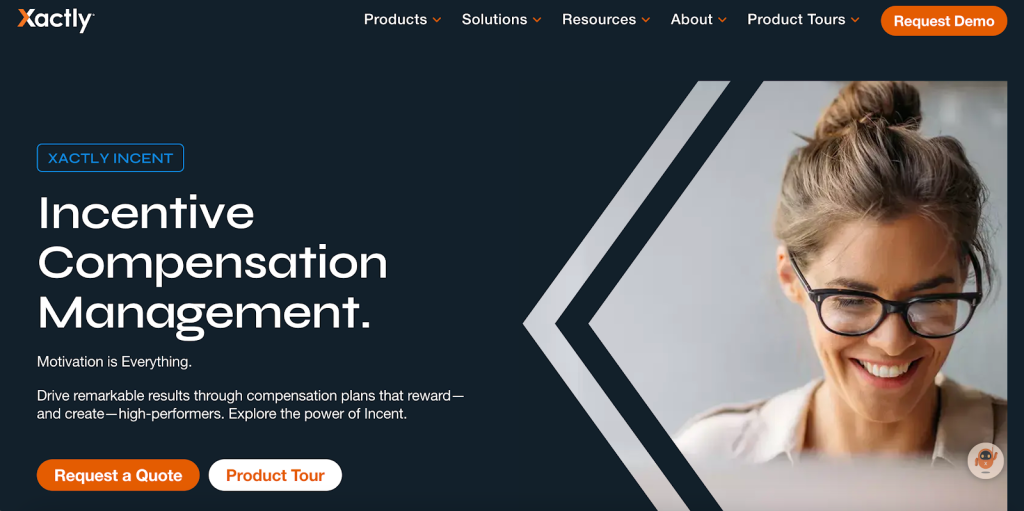
Xactly focuses on compensation, which is a critical but often overlooked part of B2B sales operations. It ensures commissions are accurate, transparent, and aligned with performance.
Key Features
- Commission Automation: Calculate incentives accurately and automatically
- Compensation Planning: Design and manage incentive structures
- Quota Management: Set and track sales targets
- Performance Tracking: Align payouts with actual results
- Audit & Compliance: Ensure transparency in compensation
- Reporting Tools: Analyze compensation impact on performance
Best for
Commission and incentive management.
Strengths
- Automates compensation calculations
- Reduces payout errors
- Scales with large teams
Considerations
- Niche use case
- Requires CRM integration
Pricing
- Around $20–$40/user/month
- Custom enterprise pricing
How to Choose Sales Operations Tools
Don’t focus only on features. Look at how the tools work together. Think in terms of a system. Not separate tools. The real value comes from connection and flow.
Here are the key criteria to evaluate:
01: Things start breaking.
At first, it doesn’t look serious. Just small delays. Messy data. Missed follow-ups.
But that’s how most B2B sales operations problems begin.
You think it’s a performance issue.
It’s not.
It’s the system.
Too many sales tools.
Not enough connection between them.
And suddenly, your workflow slows down.
That’s one of the biggest sales operations challenges.
02: Cut the clutter.
You don’t need more tools. You need the right ones.
Start with your stack.
Look at your CRM/Sales Software.
What’s working? What’s not?
If a tool doesn’t integrate properly, it creates more problems than it solves.
Native integrations matter. Always.
This is one of the core best practices for sales operations.
Keep your system clean. Connected. Scalable.
03: Fix the data first.
Bad data breaks everything.
If your data is outdated or incomplete, your team wastes time chasing the wrong leads.
No tool can fix that unless data quality is a priority.
Strong governance matters.
Access control. Compliance. Accuracy.
Because one of the real benefits of sales operations is trust in your data.
Without that, nothing works.
04: Let automation do the work.
Manual work is the real bottleneck.
Routing leads. Assigning owners. Sending follow-ups.
All of this should be automated.
That’s where sales operations automation changes everything.
It removes repetitive tasks without killing personalization.
The goal isn’t more activity.
It’s better output with less effort.
05: Think ahead or start over later.
Most teams don’t plan for growth.
And then they outgrow their tools.
Your system should scale with you.
More data. More reps. More complexity.
The best sales operation tools don’t just solve today’s problems.
They prevent tomorrow’s.
Because switching systems later?
That’s expensive. And painful.
Final Take: Simplify Your Sales Operations for Better Results
Wrapping up a topic like this can feel overwhelming. There’s always more you could say, more tools you could explore, and more features you could compare. But at its core, choosing the right system doesn’t have to be complicated.
Focusing on how tools actually improve your workflow—rather than just what they offer—can make the decision much easier. The right setup should simplify your process, not add to it.
Of course, there’s no single “perfect” stack. Every team builds differently. Some prioritize automation. Others focus on data or visibility. It all depends on where your current gaps are.
So what matters most to you when choosing from the best sales operation tools? Is it speed, control, scalability—or something else entirely?
Would love to hear your thoughts.
See How LeadAngel Can Transform Your Lead Management
Curious to experience the power of LeadAngel firsthand? We understand!
We're offering a complimentary trial so you can explore LeadAngel's features at your own pace. Once you request a free trial, we'll schedule a personalized onboarding session to ensure you maximize the value of LeadAngel.
Ready to take your lead management strategy to the next level? Request your LeadAngel trial today!
In addition to exploring the platform, we recommend visiting our LeadAngel Help Center for in-depth guidance. Our dedicated customer support team is also available to answer any questions you may have at sales@leadangel.com.
FAQs
Sales operation software is used to manage and automate the backend processes of a sales team. It handles lead routing, data management, reporting, forecasting, and workflow automation inside your CRM.
It removes manual work. It automates lead assignment, follow-ups, and reporting. It improves data accuracy and gives better visibility into your pipeline. Result: faster response times and better conversions.
Sales operations focuses on systems, processes, and data. Sales enablement focuses on helping reps sell better (content, training, tools). Ops builds the system. Enablement helps reps use it effectively.
Use tools with native CRM integration (like Salesforce or HubSpot). Set up bidirectional sync. Map fields correctly. Test workflows before going live. Avoid relying heavily on third-party connectors if possible.
Lead response time Conversion rates (lead → opportunity → deal) Pipeline velocity Forecast accuracy Win rate Sales cycle length These show how efficient your system actually is.
Sales operations focuses only on sales processes. Revenue operations (RevOps) aligns sales, marketing, and customer success under one system. Sales ops is a part of RevOps.
Sales operations builds the system behind revenue. Better lead routing, cleaner data, and automation speed up deals and reduce missed opportunities. It directly impacts pipeline velocity, predictability, and overall revenue growth.
Strong CRM integration Automation capabilities Data accuracy and governance Scalability Reporting and visibility If it doesn’t improve your workflow, it’s not the right tool.
Check if it scales with your team size and data volume. Test integration with your current stack. Review automation capabilities. Understand total cost (setup + maintenance). Validate data quality and security compliance.

