Key Takeaways
| If Your Priority Is… | Recommended Tools | Why They Stand Out |
|---|---|---|
| Advanced routing logic as your team scales | LeadAngel, LeanData | These platforms handle complex routing rules, territory management, and account ownership without creating extra manual work. |
| Faster follow-up on inbound leads | Chili Piper, RevenueHero | They help connect prospects with the right sales rep quickly, often while interest is still high. |
| Better support for account-based strategies | LeadAngel, Traction Complete | Both tools help keep account ownership, matching, and territory alignment organized as account structures become more complex. |
| Simple lead distribution inside Salesforce | Kubaru, Salesforce Native | Good options for teams that want reliable lead assignment without adding another complicated system. |
| End-to-end lead management in one platform | LeadAngel, LeadSquared | Capture, score, nurture, and route leads without stitching together multiple tools |
The hardest part about buying a lead routing tool in 2026 isn’t finding options.
It’s to evaluate which software actually solves the problem you’re trying to fix.

The real challenge isn’t finding a tool that can assign leads. The challenge is finding one that can handle the way your business actually operates. As routing rules become more complex, features like territory management, account matching, and ownership controls start to matter much more.
On paper, they look similar. In practice, they’re built for completely different revenue operations environments.
That’s why feature lists alone rarely tell the full story. In this guide, we have compared the 12 best lead routing software platforms available in 2026 based on their features, best fit, CRM integrations, and their pros and cons, so you can identify the right platform before investing time in demos and evaluations.
What Is Lead Routing Software?
Lead routing software automatically assigns incoming leads to the right sales representative, account owner, or team based on predefined logic. That logic can be based on geography, territory, company size, industry, product interest, lead score, or account ownership. Its primary purpose is to eliminate manual lead allocation, reduce response times, and ensure every lead follows the correct path through the sales process.
It indicates fewer delays and better lead coverage. For RevOps and SalesOps teams, it means a routing process that can scale without becoming increasingly difficult to maintain. Many teams also use automated lead routing software to enforce territory rules, support account-based selling strategies, and reduce CRM data inconsistencies.
How We Evaluated These Tools?
Every lead routing tool on this list was assessed against four operational dimensions that matter most to growing B2B teams
- Routing depth — Can the system handle simple round-robin routing, as well as territory routing, account-based routing, and weighted routing?
- CRM integration — Does the software work well with tools like Salesforce, HubSpot and Microsoft Dynamics without needing a lot of work?
- Additional capabilities — What additional features does the software offer?
- Pricing accessibility — Is it practical for mid-market teams, or is it mainly built for enterprise budgets?
12 Best Lead Routing Software / Tool (Reviewed By Experts)
The market is crowded with lead routing platforms, but they don’t all solve the same problem. Some focus on simple lead assignment, while others support complex territory management, lead-to-account matching, and advanced routing automation.
To help narrow your options, we’ve compared the top solutions based on features, integrations, scalability, and ease of implementation, including some of the best lead routing software for SaaS teams.
| Tool Name | Best Fit | CRM Supported | Key Features |
|---|---|---|---|
| LeanData | Enterprise organization running Salesforce-centric revenue operations | Salesforce | Lead-to-account matching, revenue orchestration, account matching, territory routing |
| LeadAngel | Enterprise teams with complex routing requirements | Integrates with all major CRMs, including Salesforce, HubSpot, and Microsoft Dynamics 365 | Advanced lead routing, Lead-to-account matching, territory management, calendar scheduling, and data deduplication. |
| Chillipiper | Inbound-heavy teams focused on speed-to-lead | Salesforce, HubSpot | Instant meeting booking, form routing, concierge scheduling, SDR handoff |
| Kubaru | Salesforce teams looking for a lightweight routing solution | Salesforce | Lead distribution, queue management, workload balancing, round robin distribution |
| Traction Complete | Account-based sales organizations with complex account structures | Salesforce | Account hierarchy management, lead-to-account matching, territory alignment |
| LeadSquared | Companies managing both marketing automation and lead distribution | Salesforce and native CRM | Lead capture, nurturing, scoring, workflow automation, lead assignment |
| Default | High-growth inbound teams using AI-assisted qualification | HubSpot, Salesforce | Lead qualification, enrichment, routing automation, scheduling |
| Apollo.io | Sales teams seeking prospecting and basic lead assignment in one platform | Salesforce, HubSpot and others | Prospect database, enrichment, outreach automation, workflow automation |
| Revenue Hero | Organizations focused on instant meeting qualification and booking | Salesforce, HubSpot | Meeting scheduling, qualification workflows, inbound conversion optimization |
| ZoomInfo | Enterprises prioritizing data enrichment and buyer intelligence | Salesforce, HubSpot, Microsoft Dynamics and others | Contact database, intent data, enrichment, workflow automation |
| Salesforce(Natuve) | Organizations that prefer building routing directly inside their CRM | Native Salesforce CRM | Lead assignment rules, Flow automation, territory management, queues |
| Cal.com | Teams looking for flexible scheduling workflows and developer customization | CRM integrations via APIs and connectors | Scheduling automation, booking workflows, calendar orchestration |
Now let’s discuss each tool in detail-
1) LeanData
G2 Rating: 4.6/5
Quick Overview
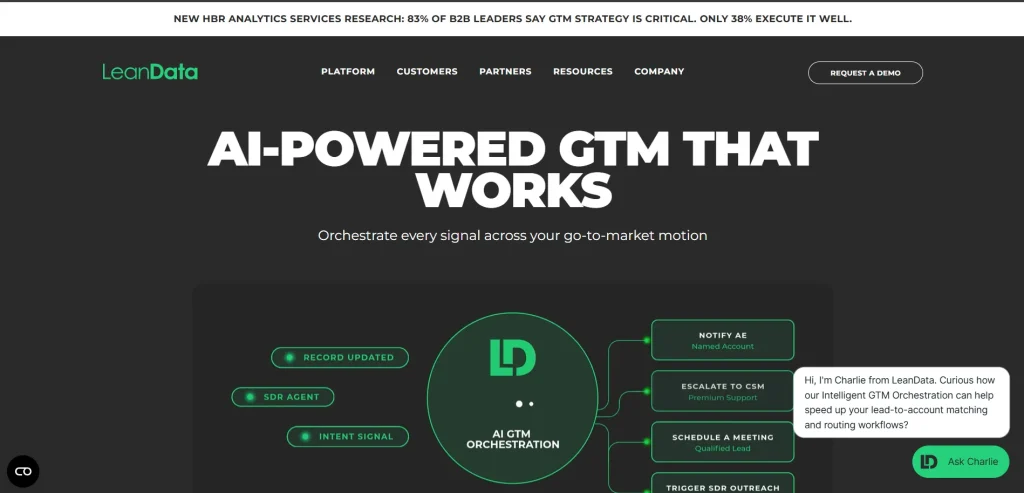
LeanData is widely used by enterprise revenue teams that need greater control over lead routing and account ownership. As a lead routing software for Salesforce, it helps revenue teams manage lead routing, account matching, territory assignments, and opportunity routing through a visual drag-and-drop interface.
Key Features
- Lead-to-account matching
- Revenue orchestration
- Territory management
- Opportunity routing
- Visual FlowBuilder
- Salesforce integration
Pros
- Highly flexible routing engine
- Strong Salesforce ecosystem support
- Handles complex ownership structures well
Cons
- Learning curve for new users
- Can be expensive for smaller teams
Pricing
Custom pricing available on request.
Website: https://www.leandata.com
Best For
Enterprise companies running Salesforce and managing complex routing, territory, and account ownership requirements.
2) LeadAngel
G2 Rating: 4.5/5
Quick Overview
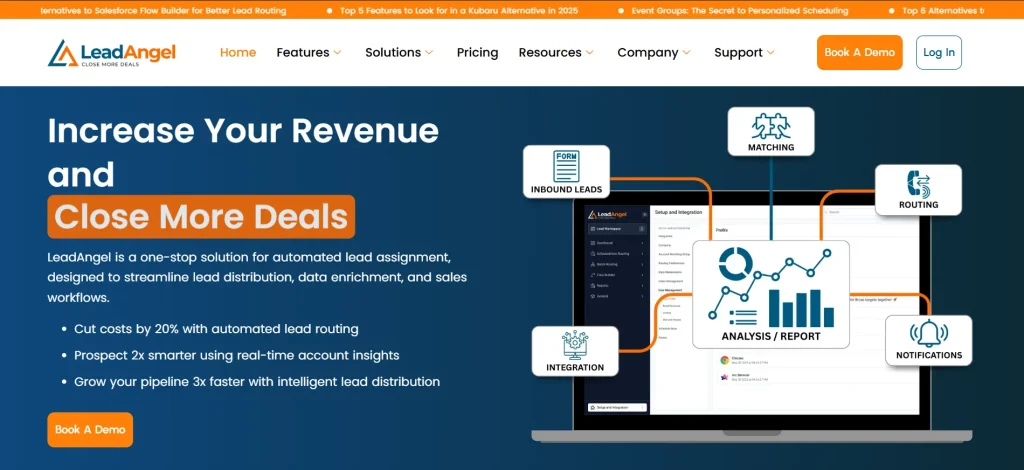
LeadAngel is a sales acceleration platform and automated lead routing software built for RevOps, MarOps, and Sales Ops teams requiring advanced lead assignment. Enterprise teams are able to easily manage lead routing, lead-to-account matching, territory management, duplicate prevention, scheduling, and handoffs from a single platform. The result is greater control over ownership rules and fewer operational bottlenecks as revenue teams scale.
Key Features
- Lead routing and distribution
- Lead-to-account matching
- Territory management
- Round-robin and weighted assignment
- Meeting scheduling
- Duplicate prevention
Pros
- Supports highly customized routing scenarios
- Strong account matching functionality
- Helps maintain cleaner CRM ownership records
Cons
- Setup requires careful planning
- Some advanced capabilities may be unnecessary for smaller teams
Pricing
Custom pricing available on request.
Website: : https://www.leadangel.com
Best For: Enterprise and mid-market B2B teams with complex lead routing, territory management, and account-based selling requirements. Ideal for RevOps teams that want a single platform for routing, matching, deduplication, and scheduling.
3) Chili Piper
G2 Rating: 4.5/5
Quick Overview
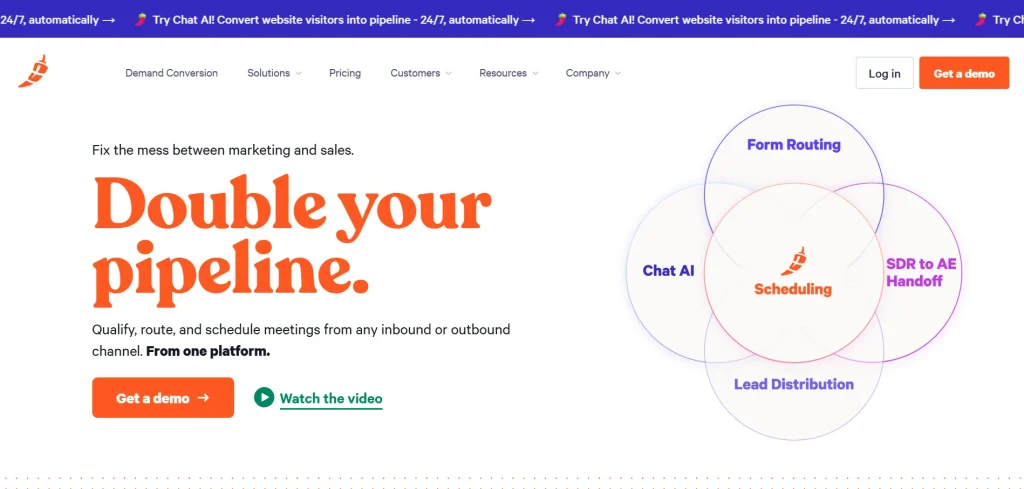
Chili Piper is designed to help companies respond to inbound leads faster. Many teams using HubSpot also consider it a lead routing software for HubSpot because it automatically routes qualified leads to the right sales rep and allows instant meeting bookings. It reduces delays between lead capture and the first sales conversation.
Key Features
- Instant meeting scheduling
- Lead qualification
- Form routing
- Concierge scheduling
- Calendar automation
- Salesforce and HubSpot integrations
Pros
- Improves speed-to-lead
- Easy scheduling experience for prospects
- Strong inbound conversion capabilities
Cons
- Routing flexibility may not match enterprise-focused tools
- Pricing can increase as usage grows
Pricing
Starts with $1,250 per month for 15 seats
Website: https://www.chilipiper.com
Best For
Companies that generate a high volume of inbound leads and want to convert them into meetings as quickly as possible.
4) Kubaru
G2 Rating: 4.9/5
Quick Overview
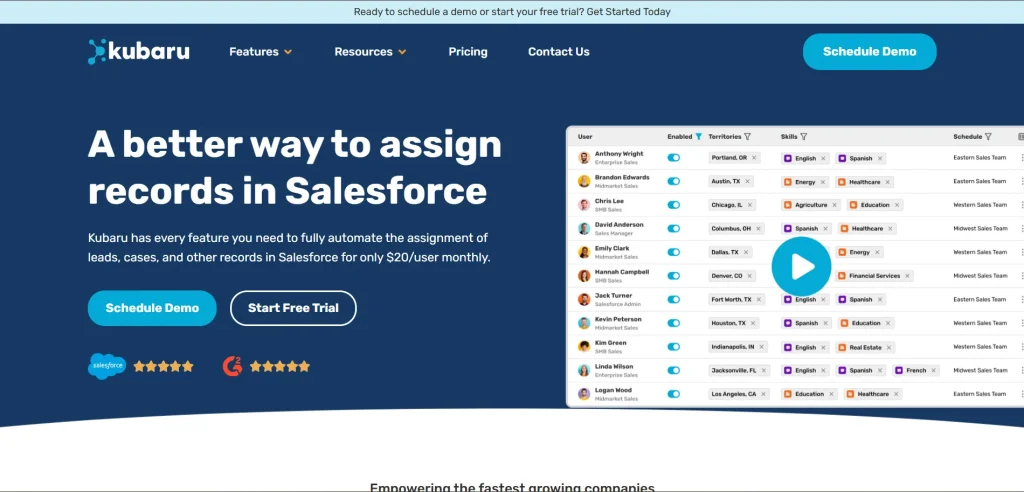
Kubaru is built for Salesforce teams looking for a simpler way to manage lead assignment. It automatically distributes leads, balances reps’ workloads, and provides managers with clear visibility into who is receiving what. Kubaru offers the right level of automation without larger enterprise complexity.
Key Features
- Round-robin routing
- Lead assignment automation
- Queue management
- Workload balancing
- Reporting dashboards
- Salesforce integration
Pros
- Easy to implement
- User-friendly interface
- Excellent customer satisfaction ratings
Cons
- Limited outside Salesforce
- Fewer advanced routing capabilities
Pricing
Starts with $20/month/user.
Website: https://www.kubaru.io
Best For
Salesforce teams looking for a straightforward lead routing solution that is easy to manage and maintain.
4) Traction Complete
G2 Rating: 4.7/5
Quick Overview
Managing accounts, territories, and ownership records becomes increasingly difficult with time. Traction Complete helps revenue teams manage lead-to-account matching, account hierarchies, territory planning, and ownership alignment directly within Salesforce.
Key Features
- Lead-to-account matching
- Account hierarchy management
- Territory planning
- Account ownership management
- Salesforce-native workflows
- Data management tools
Pros
- Strong account management capabilities
- Helps maintain CRM data quality
- Built specifically for Salesforce users
Cons
- Primarily focused on Salesforce environments
- Some features may require admin expertise
Pricing
Custom pricing available on request.
Website: https://www.tractioncomplete.com
Best For
Companies using account-based sales strategies and managing complex account structures within Salesforce.
5) LeadSquared
G2 Rating: 4.5/5
Quick Overview
LeadSquared brings lead capture, lead management, marketing automation, and lead distribution together in one platform. Rather than switching between multiple systems, teams can manage the entire lead journey—from the first interaction to sales handoff—in a single place. This makes it a practical choice for businesses that prefer an all-in-one solution.
Key Features
- Lead management
- Marketing automation
- Lead scoring
- Workflow automation
- Lead distribution
- Reporting and analytics
Pros
- Covers multiple stages of the lead lifecycle
- Easy-to-use automation workflows
- Strong lead tracking capabilities
Cons
- Routing capabilities are not as advanced as dedicated routing platforms
- Customization options may vary by plan
Pricing
Begins with Rs. 2500 per month per user
Website: https://www.leadsquared.com
Best For
Businesses looking for a combined lead management and lead routing solution.
6) Default
G2 Rating 4.5/5
Quick Overview
Default helps companies qualify, route, and schedule inbound leads. The platform uses automation to move prospects from form submission to sales conversations faster, helping teams improve response times and reduce administrative tasks.
Key Features
- Lead qualification
- Automated routing
- Meeting scheduling
- Workflow automation
- CRM integrations
- Lead enrichment
Pros
- Fast setup process
- Strong inbound lead workflows
- Reduces manual qualification work
Cons
- Newer platform compared to established competitors
- Less suitable for highly customized enterprise routing
Pricing
Custom pricing available on request.
Website: https://www.default.com
Best For
High-growth teams looking to automate inbound lead qualification, routing, and meeting scheduling.
7) Apollo.io
G2 Rating: 4.7/5
Quick Overview
Apollo.io is widely known for sales prospecting, but it also includes workflow automation features that support lead management and assignment. Teams often choose Apollo when they want prospecting, enrichment, outreach, and basic routing capabilities within a single platform.
Key Features
- Prospect database
- Contact enrichment
- Sales engagement
- Workflow automation
- Lead assignment
- Analytics and reporting
Pros
- Large contact database
- Combines prospecting and outreach tools
- Good value for growing sales teams
Cons
- Lead routing is not its primary focus
- Advanced routing capabilities are limited
Pricing
Free plan available. Paid plans starting from $49/month.user
Website: https://www.apollo.io
Best For
Sales teams that want prospecting, enrichment, and basic lead management in one platform.
8) RevenueHero
G2 Rating: 4.8/5
Quick Overview
RevenueHero focuses on helping companies convert qualified inbound leads into booked meetings faster. It automatically evaluates leads, routes them to the right rep, and schedules meetings without requiring multiple handoffs. This helps sales teams engage prospects while interest is still high.
Key Features
- Meeting scheduling
- Lead qualification
- Automated routing
- Calendar management
- CRM integrations
- Real-time booking
Pros
- Excellent speed-to-lead experience
- Simple user interface
- Strong scheduling automation
Cons
- Scheduling is a bigger focus than advanced routing
- Enterprise routing requirements may need additional tools
Pricing
Plan starts with $35/moth/user + $99/month fixed platform fee
Website: https://www.revenuehero.io
Best For
Inbound-focused teams that want to reduce delays between lead capture and meeting booking.
9) ZoomInfo
G2 Rating: 4.5/5
Quick Overview
Most companies know ZoomInfo for its B2B contact database and buyer intelligence capabilities. Beyond data enrichment, the platform also helps teams automate lead qualification and routing workflows. By enriching records before assignment, sales teams can make more informed routing decisions.
Key Features
- Contact and company database
- Buyer intent data
- Lead enrichment
- Workflow automation
- Sales intelligence
- CRM integrations
Pros
- Extensive business data coverage
- Strong enrichment capabilities
- Valuable intent insights
Cons
- Routing is not the platform’s primary use case
- Can be expensive for smaller organizations
Pricing
Custom pricing available on request.
Website: https://www.zoominfo.com
Best For
Organizations that prioritize data enrichment and buyer intelligence alongside lead routing workflows.
11) Salesforce (Native)
G2 Rating: 4.4/5
Quick Overview
Many companies start their lead routing journey inside Salesforce. Native features such as assignment rules, queues, Flow Builder, and territory management allow teams to automate lead distribution without purchasing additional software. For simple routing requirements, these capabilities are often enough.
Key Features
- Lead assignment rules
- Salesforce Flow
- Queues
- Territory management
- Workflow automation
- Reporting dashboards
Pros
- No additional routing platform required
- Built directly into Salesforce
- Flexible for basic use cases
Cons
- Complex routing can be difficult to maintain sometimes
- Requires Salesforce admin resources
Pricing
Starts with $25/user/month
Website:: https://www.salesforce.com
Best For
Salesforce customers with straightforward routing needs and access to Salesforce administration resources.
12) Cal.com
G2 Rating: 4.6/5
Quick Overview
Cal.com is best known as an open-source scheduling platform. While it is not a traditional lead routing solution, many teams use it to automate meeting distribution and connect prospects with the right person based on availability, team structure, or booking rules. Its flexibility appeals to organizations that want greater control over scheduling workflows.
Key Features
- Meeting scheduling
- Team routing
- Calendar integrations
- Round-robin booking
- Workflow automation
- Open-source customization
Pros
- Highly customizable
- Open-source platform
- Flexible scheduling options
Cons
- Not a dedicated lead routing platform
- Requires additional tools for advanced routing
Pricing
Free plan available and paid plans start with $12/user/month
Website:: https://cal.com
Best For
Teams who are looking for flexible scheduling and meeting distribution rather than full-scale lead routing automation.
How To Choose Lead Routing Software?
Most lead routing platforms look compelling during a sales demo. The real test arrives six months later — when territories restructure, new products launch, and lead volume doubles. That’s when you’ll find out whether the platform can actually support the operational complexity of how your business works.
Here are the five evaluation criteria that matter most for B2B teams:
1. Make Sure It Can Route Leads Instantly
Lead routing should happen automatically and in real time. Nobody wants a high-intent demo request sitting in a queue waiting for manual assignment. A good lead distribution software solution should move leads to the right rep as soon as they enter your system.
2. Check How Flexible the Routing Rules Are
Every company has its own way of assigning leads. Some route by territory, others by account owner, product line, industry, or lead score. The platform should make it easy to adjust routing rules as your sales process changes without requiring constant admin support.
3. Look Beyond Simple Round-Robin Assignment
Round-robin works for does not work for everyone. Most growing companies need more than that. Think about how the platform handles account ownership, lead-to-account matching, named accounts, and territory changes. These situations become much more common as the business scales.
4. Review Your Existing Tech Stack
Lead routing doesn’t happen on its own. Choose a tool that works with your CRM and sales tools. This reduces manual effort and helps keep your data organized.
5. Buy for the Next Stage of Growth
Many teams choose a tool based on their current requirement and outgrow it a year later. As your business grows, lead routing usually becomes more complicated. New territories, additional sales teams, and account-based selling can quickly add more routing rules. An enterprise lead routing software will manage that complexity without creating extra manual work.
Pick a software that works the way your team works today. Ensure that it can support you as the business grows. In many cases, simplicity and flexibility are more valuable than having dozens of extra features.
If your team manages complex routing logic, ABM strategies, or multi-CRM environments,
LeadAngel is purpose-built for this. Its combination of advanced routing, lead-to-account matching, territory management, and native CRM integrations across Salesforce, HubSpot, and Microsoft Dynamics 365 makes it the strongest option for RevOps teams that need operational precision at scale.
*Disclaimer: All third-party names, logos, content, and trademarks are the property of their respective owners. These references do not imply endorsement.
See How LeadAngel Can Transform Your Lead Management
Curious to experience the power of LeadAngel firsthand? We understand!
We're offering a complimentary trial so you can explore LeadAngel's features at your own pace. Once you request a free trial, we'll schedule a personalized onboarding session to ensure you maximize the value of LeadAngel.
Ready to take your lead management strategy to the next level? Request your LeadAngel trial today!
In addition to exploring the platform, we recommend visiting our LeadAngel Help Center for in-depth guidance. Our dedicated customer support team is also available to answer any questions you may have at sales@leadangel.com.
FAQs
Yes. Most teams don't want a different system for inbound leads and outbound assignments. Modern lead routing software can handle both.
Lead routing tools help in responding faster by sending automated leads to the right salesperson. It overcomes manual lead assignment delays and reduces the probability of unnoticed leads sitting in the CRM. When a salesperson gets back to someone quickly, it can really make a difference. This can turn a situation where you might have lost a sale into a conversation that actually helps you sell something. A timely response from the salesperson is very important because it can convert a missed opportunity into a productive sales conversation with the salesperson.
Yes it definitely can. Lead routing software is designed to work alongside automation marketing tools like Marketo and Pardot. It makes lead information flow automatically between marketing and sales. Some AI lead routing software platforms can also use that data to make smarter routing decisions and get leads to the right rep faster.
Automated lead routing helps leads reach the right salesperson faster. It reduces delays and missed opportunities. Good lead assignment software also ensures lead distribution on the basis of the right criteria. So that sales reps spend less time sorting leads and more time having meaningful conversations.
Measure ROI by tracking a few simple things after the implementation of routing software. Track response time of the lead, conversion rates, and the number of times a lead is reassigned. You can consider a tool valuable if these numbers improve and your team spends less time manually fixing ownership. When evaluating what tools automate lead routing, also look at how much manual effort they remove from your daily workflow.
It varies for the sales team. Some teams need advanced routing rules, while others simply want leads assigned quickly and fairly. Teams with more complex routing should choose LeadAngel. Inbound-focused teams often move forward with Chili Piper or RevenueHero. The best lead distribution software is often the one that fulfills your sales process and helps your team work more efficiently.