Quick Summary
Default is one of the more well-regarded lead routing and scheduling platforms out there — the G2 ratings back that up, and so does the sheer number of RevOps teams running their inbound motion on it. So why does the search for Default alternatives keep growing anyway?
Usually it isn’t because the product stopped working—it’s the $750/month base fee, the per-user add-on, and a learning curve that shows up repeatedly in G2 reviews that push teams to look elsewhere.
This guide breaks down five real alternatives to Default sales scheduling software for 2026—LeadAngel, Chili Piper, Calendly Routing, LeanData, and HubSpot Workflows—which one fits, where it earns its reputation, and where it runs out of road.

Key Takeaways
- • Default is an all-in-one revenue operations platform that combines lead routing, meeting scheduling, form-based qualification, enrichment, and CRM workflow automation into a single no-code system.
- • Businesses search for Default alternatives mainly for four reasons: the platform-fee-plus-per-user cost stops making sense for small teams, routing decisions aren’t always easy to audit, the HubSpot integration lags, and enrichment credits run out faster than expected.
- • The right Default alternatives depend on the actual bottleneck: native lead-to-account matching, enterprise routing speed, lightweight scheduling, or CRM-native automation are four different problems with four different answers.
- • LeadAngel, Chili Piper, Calendly, LeanData, and HubSpot Workflows round out the list. Each platform solves a narrower piece of the routing-and-scheduling puzzle than Default tries to own.
- • LeadAngel is the strongest fit for teams whose real problem is routing accuracy inside Salesforce, HubSpot, or Microsoft Dynamics 365 — it posts a 99.7% lead-to-account match rate.
Most teams don’t start evaluating Default alternatives over price. They start the day with a lead routed to the wrong rep, and the logs can’t tell them why.
A routing decision nobody can explain is one of the most common reasons a team starts looking for alternatives. It’s rarely a talent problem. It’s almost always a routing problem: the rules engine didn’t account for an out-of-office rep, the handoff between SDR and AE dropped the lead, or the logic simply isn’t auditable enough to fix when it breaks.
Default built its reputation solving exactly that. Don’t get us wrong—it’s a legit platform, and plenty of RevOps teams swear by it for their entire inbound motion. But if you’ve made it this far, you’re probably nodding your head because you know you’re in one of two situations:
- Your team evaluated Default, and the price tag or the learning curve gave you pause
- You’re already on it and hitting walls around HubSpot support, enrichment credits, or routing logic you can’t fully audit.
Either way, the evaluation deserves more than a feature checklist. This blog is a straight alternative to the default sales scheduling software based on
- Features
- What makes it better than Default
- Pricing and
- Best fit
What Is Default?
Default is a revenue operations platform that combines inbound lead routing, meeting scheduling, form-based qualification, data enrichment, and CRM workflow orchestration into a single no-code system. It works by enriching a form submission in real time, applying branching routing rules—company size, territory, and existing account ownership—and then surfacing a live calendar for the buyer to book instantly. Teams use it to collapse form-to-meeting time from hours down to seconds.
But that positioning has shifted over the past two years. Default started as a scheduling and lead routing tool. Now, it has grown into a broader orchestration layer that touches nearly every step between form fill and booked meeting.
The same breadth that makes Default powerful is what makes it expensive and heavy to implement.
Now, let’s explore the reasons why businesses actively look for an alternative to default sales scheduling software.
Why Are Businesses Looking For Default Alternatives?
Every once in a while, a sales manager or RevOps manager always worries about this question: “Why are we paying five figures a year for a routing tool?” Strip away the noise and the reasons teams start searching for Default alternatives come down to four repeatable patterns in research:
- Cost at Low Volume
Default charges a flat platform fee of roughly $750/month plus $45 per user before a single lead has been routed. According to Prospeo, teams under 500 leads/month or a small team with less lead volume rarely see a return that justifies the spend. Lighter tools like Calendly or accuracy-first platforms like LeadAngel easily close that gap fast.
- Unclear Routing Logic
“Learning Curve” shows up as a named theme in Default’s own G2 review data, and reviewers specifically call out that the workflow builder doesn’t clearly explain in the logs why a lead was routed a certain way. According to G2 reviews, one switcher from Chili Piper reported four months of unresolved routing issues before the platform worked as expected.
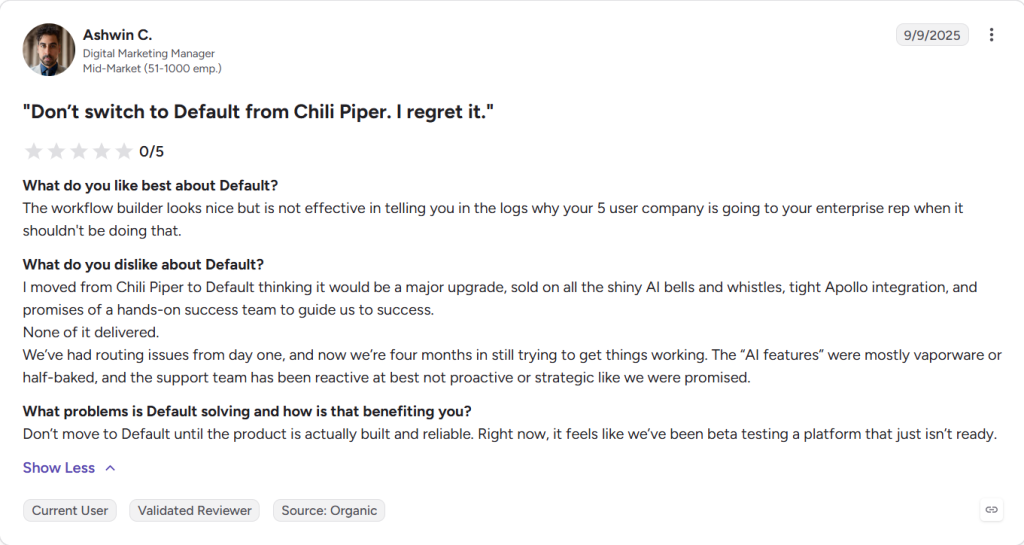
Source: https://www.g2.com/products/default/reviews/default-review-11658667
- Weak HubSpot Support
HubSpot integration is noticeably thinner than the Salesforce integration, which is a real problem if HubSpot — not Salesforce — is your system of record. Native HubSpot tools like HubSpot Workflows or CRM-agnostic platforms like LeadAngel remove that gap entirely.
- Enrichment Credits Run Out
Default prices enrichment credits at roughly $0.90 each on its entry tier, and teams enriching more than 1,000 leads a month routinely burn through the annual cap within weeks, forcing an upgrade or a second enrichment tool anyway.
None of this makes Default a bad product — the G2 data is genuinely strong, and its default scheduling and default lead routing engine do what it promises for the right team. It means the platform is built for a specific profile: high inbound volume, a dedicated RevOps admin, and budget to match. If that’s not your team, the alternatives below are worth serious consideration.
Top 5 Default alternatives in 2026
| Tool | Best For | Starting Price | Core Strength |
|---|---|---|---|
| LeadAngel | Native lead to account matching and routing accuracy | Custom tier-based pricing | 99.7% accuracy match, native to Salesforce, HubSpot, and Microsoft Dynamics 365 |
| Chili Piper | Enterprise inbound routing speed | The plan starts with $1250/month and provides up to 15 seats. | Form-to-meeting in seconds via Concierge |
| Calendly | Lightweight scheduling with minimal overhead | Offers a free plan. Paid plan starts from $10/month/user | Native routing forms, fast deployment |
| LeanData | Salesforce-native account orchestration | Custom tier based pricing | Buying-group and territory-level matching |
| HubSpot Workflows | HubSpot-first teams with simple territory logic | Offers Free and paid plans | Native to a CRM you already pay for |
1. LeadAngel — Best for Lead-to-Account Matching Accuracy
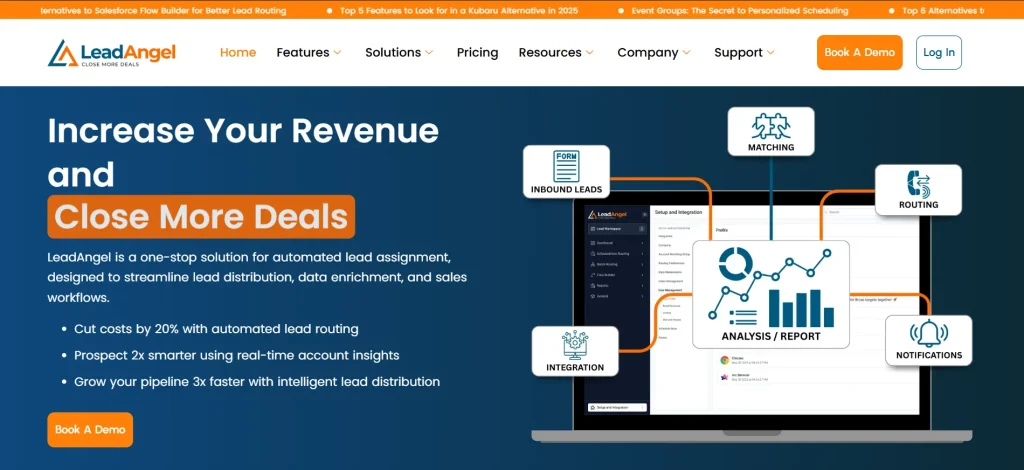
LeadAngel is an advanced lead routing, account matching, and calendar scheduling software. The platform focuses on precise lead routing and allows prospects to book their meeting with the respective SDRs and AEs.
It’s built for revenue enterprises and mid-sized businesses that have outgrown manual routing and scheduling workflows. LeadAngel integrates with Salesforce, HubSpot, and Microsoft Dynamics 365. It handles multi-CRM lead-to-account matching, flexible routing, and automated follow-ups. LeadAngel eliminates duplicates and surfaces actionable reports along the way. Sales teams save time and focus on closing deals instead of sorting leads.
LeadAngel is more than a scheduling tool. It ensures leads route to the right sales rep and linked to the right account, which lets sales reps respond quickly and work more effectively with each lead.
These features show why LeadAngel is an excellent alternative to Default:
Key Features:
- Routing & lead-to-account matching — Matches leads against existing CRM accounts with 99.7% accuracy and routes them to the right rep automatically, before a meeting is even offered.
- Calendar syncing — Syncs natively with Google Workspace and Microsoft Office 365 for real-time rep availability.
- Online & offline scheduling — Prospects book instantly after form submission, while SDRs book AE meetings in one click without leaving the CRM.
- Multiple calendar & time zone support — LeadAngel combines calendars across multiple reps and automatically adjusts for time zone differences, so prospects only see slots where everyone involved is actually free.
- Email reminders & rescheduling — Sends automated appointment reminders and gives prospects self-serve cancel/reschedule links in the invite.
- Integrations — Connects with Salesforce, HubSpot, and Microsoft Dynamics 365 or any CRM and email tools to keep data in sync.
| Criteria | Default | LeadAngel |
|---|---|---|
| Lead-to-account matching accuracy | Not independently published | 99.7% |
| Native CRM support | Strongest on Salesforce; HubSpot integration noticeably thinner | Native to Salesforce, HubSpot, and Microsoft Dynamics 365 |
| Routing Capabilities | Branching rules by territory, company size, and account ownership, but reviewers flag unclear routing logs | Round-robin, weighted logic, availability-based, Multi-layer, and custom routing rules |
| Deduplication included | Not a core feature; enrichment-focused | Included, with data deduplication add-on for advanced rulesets |
| Setup / admin overhead | Requires a dedicated RevOps admin | Built to run without a dedicated full-time admin |
| Pricing model | ~$750/month platform fee + $45/user | Custom tier-based, scoped to team size |
Pricing:
Every business runs on its own rhythm. LeadAngel’s plans are built to bend, flex, and grow with you. Need advanced lead routing, smarter data deduplication, or built-in scheduling tools? Plug them in as your team expands.
- Professional Plan — Great for small to mid-sized teams. Includes lead routing, 2-way lead-to-account matching, and email/portal-based support. Add-ons like data deduplication and Schedule Now for web forms and handoff are available.
- Professional Plus Plan — Designed for larger teams with advanced needs: lead, contact, and opportunity routing, data deduplication, and Schedule Now for web forms and handoff, plus dedicated support. On-the-Spot Transfer is available as an add-on.
What makes LeadAngel better than Default?
LeadAngel supports Salesforce, HubSpot, and Microsoft Dynamics 365 natively. Whereas G2 reviewers consistently flag Default’s HubSpot integration as thinner than its Salesforce integration. LeadAngel bundles routing, account matching, and scheduling into one platform
Best for: RevOps and marketing operations teams managing multiple CRMs side-by-side. Any mid-market to enterprise team that wants a Default alternative for lead routing, matching, and scheduling in a single platform. If you are someone looking for custom rules and features, LeadAngel is the best fit for you.
2. Chili Piper — Best for Enterprise Routing Speed
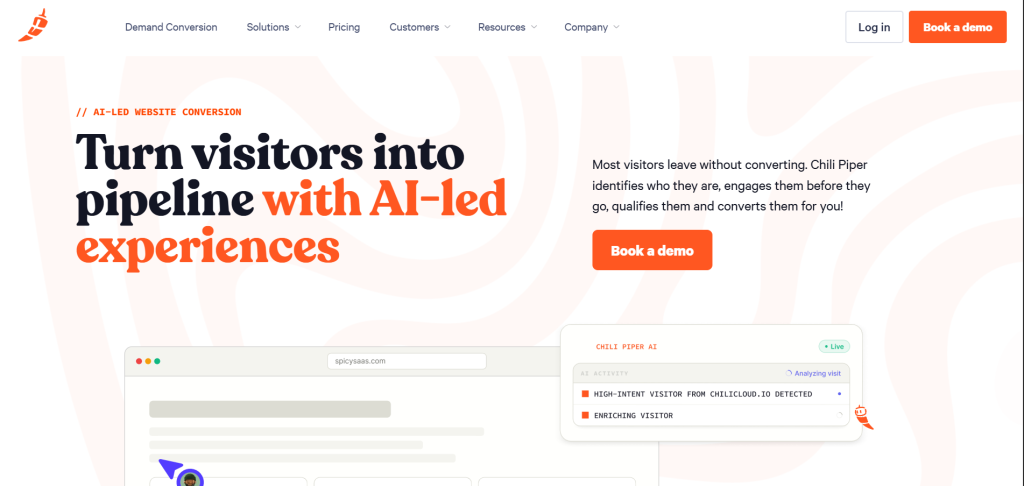
Chili Piper is built around one moment — form submit to calendar invite and its Concierge product is designed to make that transition instant. Without requiring any manual intervention. It handles SDR-to-AE handoffs, territory routing, and Salesforce-driven scheduling orchestration at enterprise scale.
These features show why Chili Piper is a strong alternative to Default:
Key Features:
- Concierge scheduling — Converts a form submission directly into a booked meeting in seconds, without a routing queue in between.
- SDR-to-AE handoff routing — Built specifically for teams passing qualified leads between two roles rather than routing to a single owner.
- Salesforce-native orchestration — Routing rules read and write directly against Salesforce objects.
- Territory and round-robin assignment — Handles both rules-based and rotational routing logic out of the box.
Pricing: Chili Piper’s routing and scheduling plan starts at $ 1,250/month. It provides up to 15 seats and costs $45/month/seat after that.
What makes Chili Piper better than Default?
Teams switch to Chili Piper because of its fast meeting scheduling and easy-to-use workflow.
Best for: Enterprise inbound teams with heavy SDR-to-AE handoff volume and a Salesforce-first tech stack.
3. Calendly Routing — Best for Lightweight Scheduling
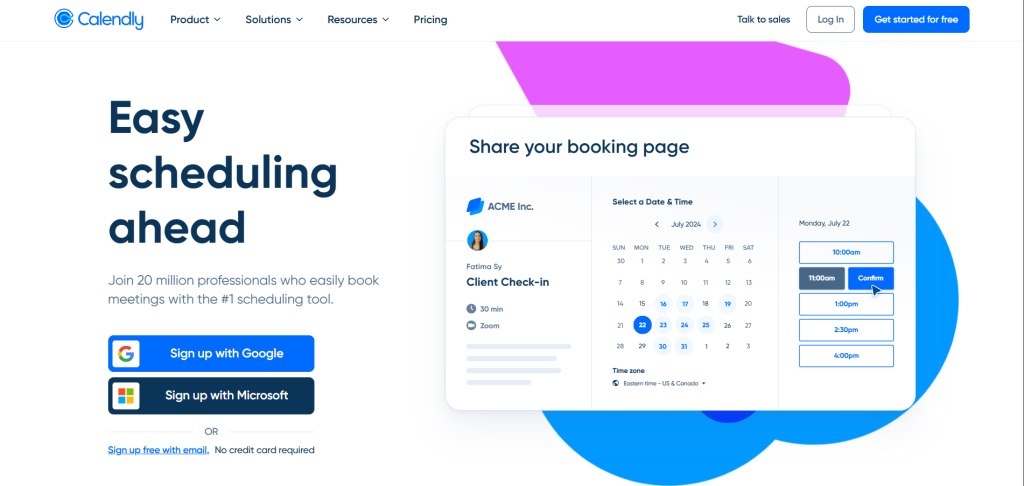
Calendly built native routing forms directly into its scheduling product, so a lead can fill out a form and land on the right rep’s calendar without a third-party form tool in between. It is something both Default and Chili Piper require.
These features show why Calendly is a solid alternative to default sales scheduling software:
Key Features:
- Native routing forms — Qualification and routing logic live inside the same product as the calendar, with no separate form builder needed.
- Instant booking links — Prospects book directly from a qualification form with zero manual handoff.
- Team and round-robin scheduling — Distributes meetings across a team without custom rule-building.
- Broad calendar and app integrations — Connect with the major calendar, video, and CRM tools most teams already run.
Pricing: Offers free and paid plans. Paid plan starts from $10 per seat per month. This makes Calendly the cheapest dedicated alternative to Default sales scheduling software on this list.
What makes Calendly better than Default for lightweight teams: For teams whose entire requirement is “route the form, book the meeting,” it does that job without any RevOps overhead. It isn’t built for lead-to-account matching or complex territory rules, so qualification depth stays intentionally minimal.
Best for: SMB and startup sales teams, customer success scheduling, and any inbound motion where operational simplicity outweighs routing sophistication.
4. LeanData — Best for Salesforce-Native Account Orchestration
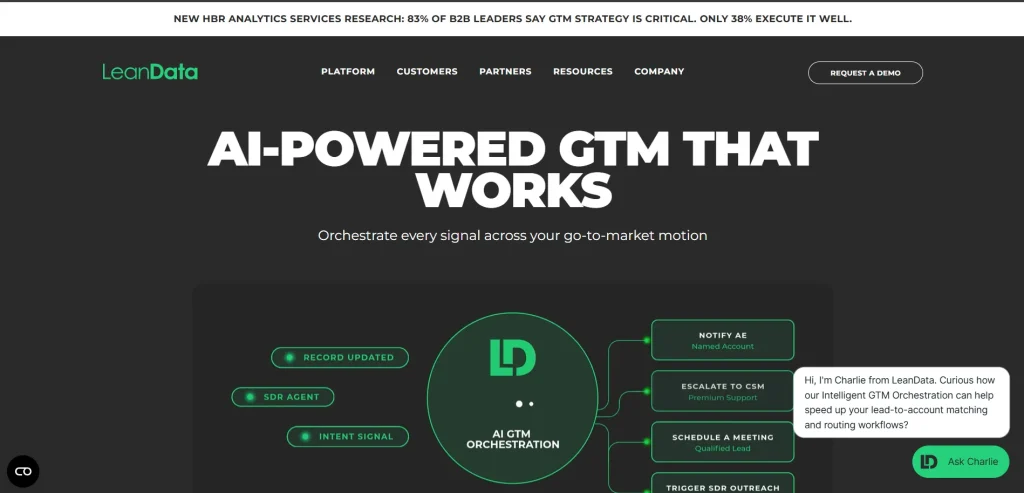
LeanData focuses on lead routing, buying-group orchestration, and territory management built specifically around Salesforce’s object model. It’s one of the deepest options on this list for organizations managing complex account hierarchies.
These features show why LeanData is a strong alternative to Default:
Key Features:
- Lead-to-account matching — Matches inbound leads against existing Salesforce accounts before routing decisions are made.
- Buying-group orchestration — Groups multiple contacts from the same account into a single coordinated routing motion.
- No-code visual flow builder — Lets RevOps map out routing logic visually rather than in code.
- Territory management — Handles complex, multi-layered territory rules natively inside Salesforce.
Pricing: LeanData’s scheduling plan offers custom tiered pricing. It has three plans named Bookit for Forms, Bookit Handoff, and Bookit Links. Vacation & Buffer Management, Fairness Calibration, Meeting Configuration, Company Branding, Audit Logs & Routing Insights are the common features that are included in all of LeanData’s scheduling plans.
What makes LeanData better than Default?
Its Salesforce ecosystem depth and no-code visual flow builder are the strongest assets. That level of orchestration is tough to find for RevOps teams that have been around the block and are running ABM.
Best For: It really shines for enterprise teams who are already deep in Salesforce—managing complex territory structures, account hierarchies, and all the messy logic that comes with it.
5. HubSpot Workflows — Best for HubSpot-First Teams
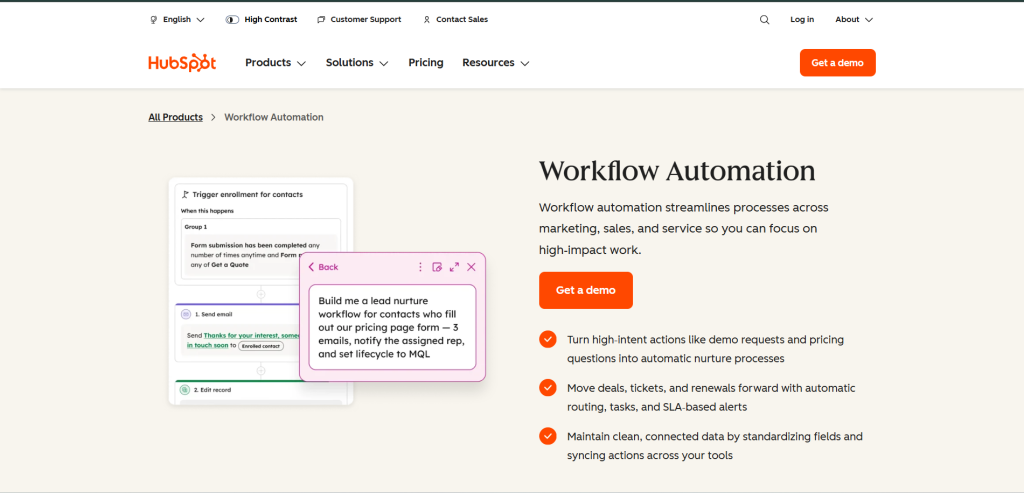
HubSpot Workflows delivers native lead assignment, lifecycle automation, and CRM-triggered routing directly inside HubSpot, with no external orchestration layer required.
These features show why HubSpot Workflows is a practical alternative to default lead routing tools:
Key Features:
- Native lifecycle automation — Triggers routing and follow-up actions directly from HubSpot property changes.
- Round-robin and rules-based assignment — Distribute leads across reps or teams without a separate tool.
- No new integration to maintain — Runs inside the CRM your marketing and sales teams already use daily.
- Workflow-triggered notifications — Alerts reps the moment a lead is assigned, inside the same system they work from.
Pricing: Free on entry-level HubSpot tiers; full workflow automation is included with HubSpot Professional.
What makes HubSpot Workflows better than Default for HubSpot-first teams?
If you’re already on HubSpot Professional or higher, workflow-based routing is included; you don’t need to buy a new tool. No new integration to maintain, and no separate vendor relationship to manage.
Best for: HubSpot-centric SMB and mid-market teams with simple, low-complexity territory assignment needs.
Final Words
The most common mistake while choosing an alternative software is buying the platform with the most features instead of the platform that fixes the actual bottleneck. If your funnel is leaking because leads are misrouted or duplicated inside Salesforce, HubSpot, or Dynamics 365, no amount of scheduling polish will fix that. You need routing accuracy first. If your bottleneck is purely booking speed, you don’t need enrichment credits or a workflow builder at all.
Of the five default alternatives covered here, LeadAngel is the one built specifically to solve the accuracy problem: native architecture, 99.7% lead-to-account match rate, and a price point that doesn’t require a dedicated admin to justify. If misrouted or duplicate leads are costing you pipeline, it’s worth seeing how LeadAngel’s routing compares to what you’re running today.
*Disclaimer: All third-party names, logos, content, and trademarks are the property of their respective owners. These references do not imply endorsement.
See How LeadAngel Can Transform Your Lead Management
Curious to experience the power of LeadAngel firsthand? We understand!
We're offering a complimentary trial so you can explore LeadAngel's features at your own pace. Once you request a free trial, we'll schedule a personalized onboarding session to ensure you maximize the value of LeadAngel.
Ready to take your lead management strategy to the next level? Request your LeadAngel trial today!
In addition to exploring the platform, we recommend visiting our LeadAngel Help Center for in-depth guidance. Our dedicated customer support team is also available to answer any questions you may have at sales@leadangel.com.
FAQs
It depends on the bottleneck. LeadAngel is the strongest pick for lead-to-account matching, routing, and meeting scheduling accuracy inside Salesforce, HubSpot, or Dynamics 365. Chili Piper wins on enterprise routing speed, and Calendly Routing wins on lightweight scheduling with almost no setup.
Yes, Calendly Routing starts at $10–$16 per seat per month. It performs well under Default's roughly $750/month platform fee plus per-user pricing.
Default scheduling refers to the calendar-booking layer. It gets a meeting on the calendar once a buyer is ready. Default lead routing is the logic layer before that: deciding which rep or team should own the lead in the first place, based on territory, account ownership, or company size
HubSpot Workflows and LeadAngel both run natively inside HubSpot, so routing decisions use live CRM data instead of a separate sync. Multiple G2 reviewers flag Default's HubSpot integration as weaker than its Salesforce integration, which is worth testing directly in a trial.