Key Takeaways
| Key Solutions | Tools |
|---|---|
| Enterprise scheduling with lead routing, CRM automation, and account ownership management | LeadAngel, Chili Piper |
| Flexible scheduling with customization and workflow control | Cal.com, YouCanBook.me |
| Simple meeting booking and team scheduling at scale | Calendly, HubSpot Meetings, Microsoft Bookings |
| Client appointment management with reminders, payments, and self-service booking | Acuity Scheduling, Appointlet |
| Multi-location scheduling and booking across multiple channels | SimplyBook.me |
Enterprise scheduling software is no longer just a calendar tool. It now plays a direct role in revenue operations and sales execution.
For sales and RevOps teams, it acts as the system that controls how quickly meetings get booked, confirmed, and handed off to the right owner. It sits between inbound interest and actual sales conversations, ensuring no lead gets stuck waiting in manual scheduling loops.

It is commonly used to automate meeting scheduling across demo requests, inbound forms, outbound campaigns, and partner-led leads. It also helps teams manage availability across regions, territories, and time zones without constant coordination.
In this blog, we are going to cover what an enterprise scheduling tool is, what factors to look at before making a decision and the top tools reviewed by experts.
What Is Enterprise Scheduling Software?
Enterprise scheduling software is centralized software for automating scheduling, coordination, and management of meetings across different teams.
These scheduling software programs easily integrate with calendars, CRM systems, and routing logic to match meeting requests with the right owner or sales rep based on predefined rules. The predefined rules can include factors such as availability, territory, priority, or deal stage.
Enterprise scheduling software eliminates the need for manual coordination. The primary function of every scheduling tool is to capture every meeting request, assign it to the right owner, and confirm it in real time. Along with updating all connected tools, which helps calendars and CRM records stay aligned without manual effort.
Hence, enterprise appointment scheduling software is designed for high-volume, distributed sales environments. Efficient coordination, faster response times, and structured meeting allocation directly support revenue operations.
What To Look For In Enterprise Scheduling Software?
When you’re evaluating what is the best enterprise scheduling software for your organization, you’ll notice the category is fragmented. There are booking link tools. There are calendar managers. There are specialized sales tools.
But real enterprise appointment scheduling software needs to do something different. It needs to handle complexity that simple solutions just ignore.
Enterprise-Grade Security and Compliance
Security is one of those features you forgot to notice. But it turns into a nightmare quickly.
Enterprise scheduling software must have controls to protect customer data and manage user access.
Look for features like-
- Single Sign-On,
- SAML authentication,
- logs of what people do,
- and permissions based on roles.
These features help companies follow security rules, simplify user management, and fulfill requirements.
As more teams use the system, it is crucial to have rules in place.
Automated Meeting Routing
The best scheduling experience is often the one that aligns with your workflow.
Manual meeting assignments take time. Companies are increasingly turning to enterprise online meeting scheduling platforms for this reason. They streamline the sales team’s workflow by automatically connecting prospects with the right sales rep based on custom rules—freeing up time for actual selling while improving the prospect experience from day one.
CRM and Calendar Integrations
Your scheduling platform should integrate naturally with your sales stack. Search for software that can integrate with your CRM and calendar systems.
The impact goes beyond operational efficiency. Organizations that move from manual scheduling to automated calendar workflows often see lead-to-meeting speed improve significantly. In many cases, businesses accelerate this process by more than 70%, helping teams engage prospects while interest is still high.
When scheduling becomes easier, opportunities move through the pipeline faster.
Centralized Administration and Governance
Scheduling processes evolve differently across teams. Sales team, customer success, support, and other departments may create their own booking pages, event types, and scheduling workflows.
It leads to inconsistent meeting booking and management. And also creates a fragmented experience for both customers and internal teams.
A good enterprise scheduling software solution brings everything into one framework. It gives operations teams centralized control over scheduling standards. Individual teams can customize workflows where needed.
This results in more consistent experience, better governance, and fewer operational complexities.
Scalability Across Teams and Regions
A scheduling process that has worked for a small team may not work for large teams. More people, bigger teams, and larger regions create new scheduling challenges.
Enterprise scheduling software should support hundreds of users without performance issues. It should also work across multiple departments and territories.
As the business grows, scheduling requirements become more complex. The platform should be able to handle that growth without making scheduling harder to manage.
A reliable enterprise online appointment scheduling software solution
- supports distributed teams,
- territory-based routing,
- shared ownership models,
- and organization-wide scheduling policies.
Reporting and Performance Insights
Scheduling generates valuable operational data.
The right platform should help you understand the meeting booking process, how quickly teams respond, and where friction is available. Reporting features should provide visibility into metrics such as
- booking volume,
- response times,
- meeting attendance,
- no-show rates,
- and scheduling trends.
These metrics give visibility to spot where deals are getting stuck, streamline their processes, and make smarter strategic decisions.
Multi-Time Zone and Global Scheduling Support
Businesses operating across multiple time zones understand that it is a basic requirement.
The platform should automatically detect time zones and adjust availability accordingly. This ensures prospects always see available meeting slots in their local time.
Internal teams should also be able to coordinate across regions without manually calculating time differences. That makes scheduling much easier for distributed teams.
10 Best Enterprise Scheduling Software (Ranked And Reviewed by Experts for Appointment Scheduling)
The right appointment scheduling software keeps your team organized and reduces the hassle of managing shifts. Whether you need simple scheduling or a more advanced system with automation and integrations, these top picks for 2026 offer solutions for businesses of all sizes.
| Tool Name | Automation Features | Best Fit | Compliance Level |
|---|---|---|---|
| LeadAngel | Intelligent lead routing, lead-to-account matching, calendar scheduling automation, CRM integration | B2B mid-sized & large enterprises | High |
| Cal.com | Custom workflows, API automation, calendar sync, booking logic control | Developers & product-led teams | Medium–High |
| Calendly | Automated scheduling links, round-robin, reminders, workflow automation | SMBs to mid-market teams | Medium |
| Chili Piper | Instant booking, smart routing, CRM automation, lead handoff workflows | Revenue teams & high-velocity sales orgs | High |
| HubSpot Booking | CRM-native scheduling, automated reminders, round-robin routing, logging | HubSpot users & inbound teams | High |
| Microsoft Bookings | Calendar sync, basic automation, appointment scheduling, notifications | Microsoft 365 businesses | High |
| Appointlet | Booking automation, calendar sync, reminders, team scheduling | Small businesses & startups | Medium |
| Acuity Scheduling | Client booking automation, payments, reminders, intake forms | Service-based businesses | Medium–High |
| SimplyBook.me | Multi-channel booking, SMS/email automation, payments, API integrations | Service industries & SMEs | High |
| YouCanBook.me | Calendar sync, automated reminders, booking pages, CRM integration | Small teams & professionals | Medium |
1. LeadAngel
G2 rating: 4.5
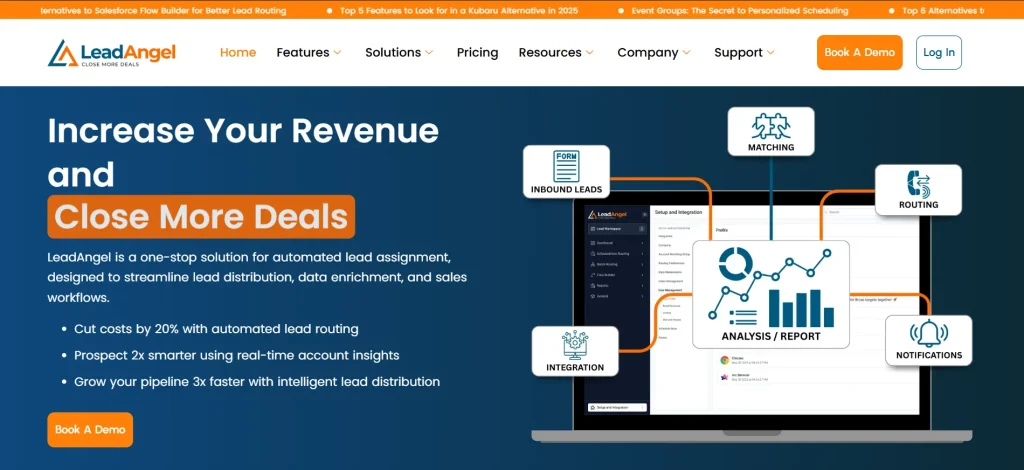
LeadAngel is software for B2B mid-sized and large enterprises that require structured control over lead routing, account matching, and meeting scheduling. It connects CRM, calendars, and routing rules so meetings are assigned and booked with the right salesperson automatically.
It plays a strong role in scheduling software enterprise workflows where speed-to-lead and accurate ownership matter.
Key Features
- Calendar syncing (Google Workspace, Microsoft 365)
- Instant online scheduling after form submission
- CRM-based offline scheduling by SDRs
- Email reminders for meetings
- Multi-calendar availability support
- Handles multiple time zones
- Supports rule-based routing
- Advanced lead-to-account matching
- Reschedule/cancel options
- Offers CRM and email integrations
Pros
- Strong enterprise routing + scheduling
- Reduces manual coordination
- Improves speed-to-lead
Cons
- Needs proper setup
- Best for mid-to-large teams
Pricing
Custom pricing plans available
Website: www.leadangel.com
2. Cal.com
G2 rating: 4.6
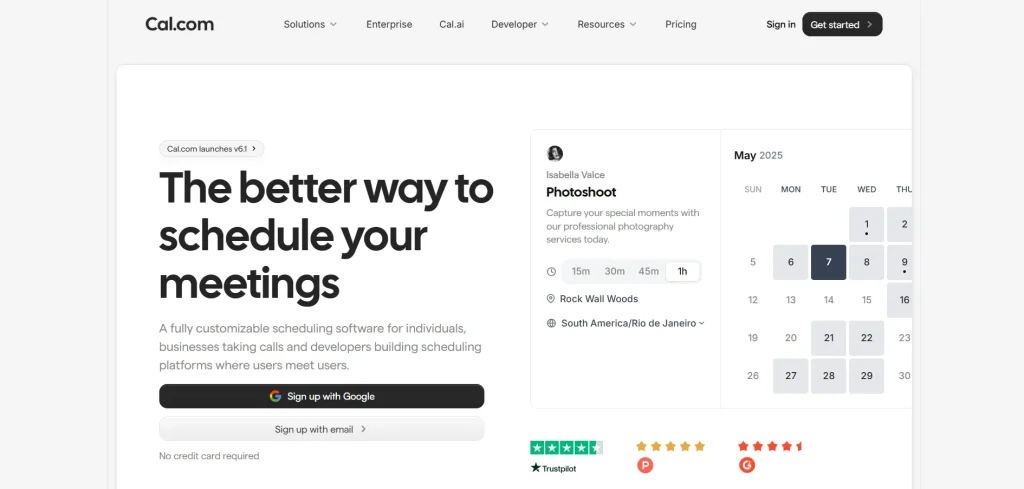
Cal.com is a flexible, open scheduling platform. It is designed for teams that want full control over booking flow building. It is widely used by technical teams who prefer customization over rigid workflows.
Key Features
- Seamless calendar synchronization
- Fully customizable scheduling system
- Advanced availability and time control
- Short and branded booking links
- Smart time zone management support
Pros
- Highly flexible
- Developer-friendly
- Easy to customize
Cons
- Requires technical setup
- Not very beginner-friendly
Pricing
Offers a free plan and paid plans starts from $12
Website: https://cal.com/
3. Calendly
G2 rating: 4.7
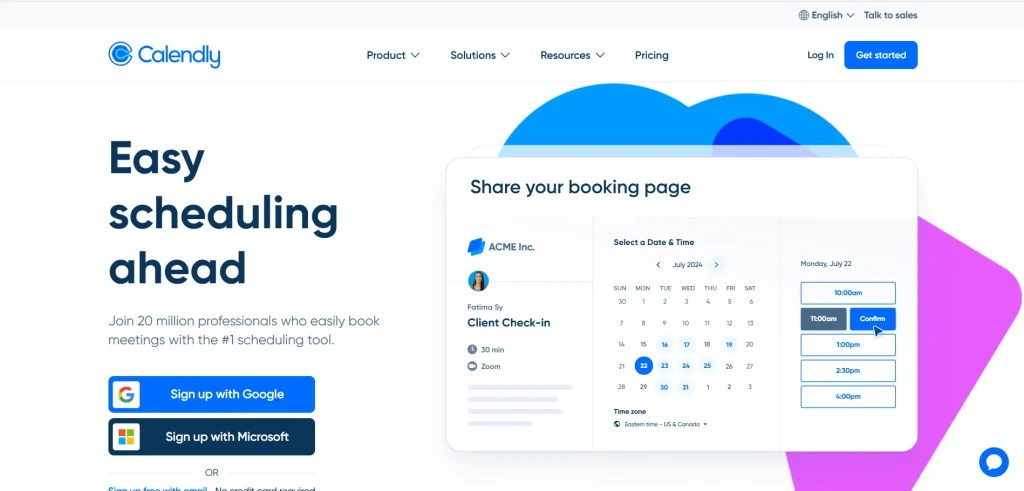
Calendly has become the enterprise meeting scheduling software that helps team to streamline meeting coordination. Users can simply share a booking link and eliminate the email back-and-forth that slows down scheduling.
Key Features
- Connects multiple calendars for real-time availability
- Automated scheduling with customizable event types
- Integration with Google and Microsoft tools
- Round robin and collective team scheduling
- Workflow automation with reminders and notifications
Pros
- Very easy to use
- Fast setup
- Reliable integrations
Cons
- Limited advanced routing
- Some features locked in higher plans
Pricing
Offers a free plan, and paid plans start from $10
Website: https://calendly.com/
4. Chili Piper

G2 rating: 4.5
Chili Piper focuses on instant inbound lead scheduling and routing. It assists the revenue team in faster lead conversion.
Key Features
- AI-generated meeting preparation briefs
- Pulls CRM and web context
- Sends calendar and Slack summaries
- Real-time updates for meeting changes
- Automated insights for sales readiness
Pros
- Strong speed-to-lead focus
- Deep Salesforce integration
- Built for revenue teams
Cons
- Higher pricing
- Setup can be complex
Pricing
Paid plans start from $1250/ month for 15 seats
Website: https://www.chilipiper.com/
5. HubSpot Booking
G2 rating: 4.4
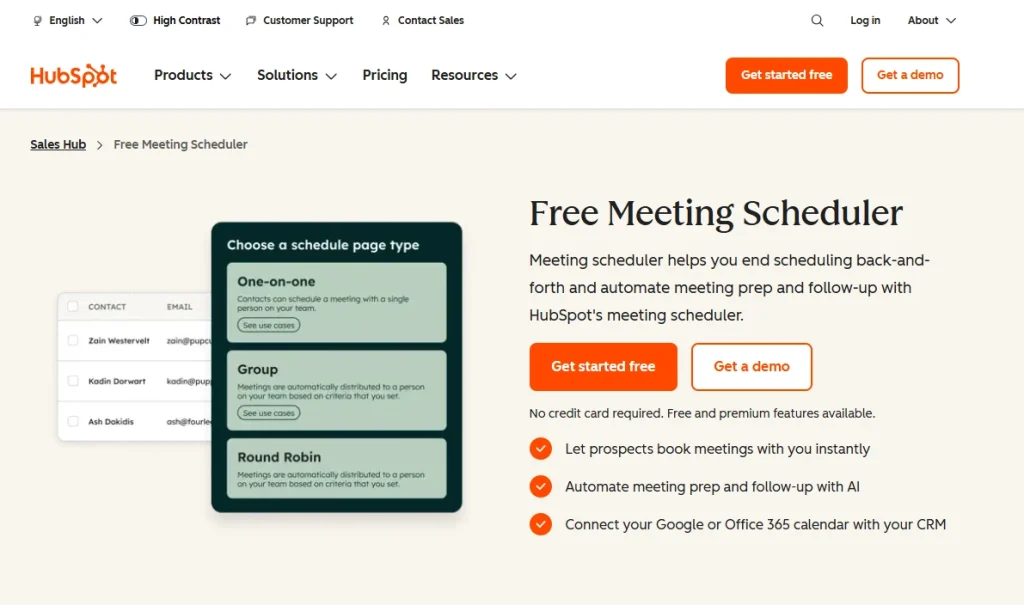
HubSpot Booking is a native scheduling tool embedded directly in HubSpot CRM. It’s ideal for teams already using HubSpot as it requires no integration setup. Meetings sync automatically to customer records, keeping your entire sales process within a single unified platform.
Key Features
- Real-time calendar booking link sharing
- Automated meeting prep and follow-up
- Google and Office 365 sync
- Round robin and group scheduling
- CRM-integrated meeting tracking and logging
Pros
- Simple and integrated
- Easy setup
- Good for inbound teams
Cons
- Limited outside HubSpot
- Basic routing
Pricing
Offers free plan and paid plan start from Rs. 585/month/seat
Website: https://www.hubspot.com/products/sales/schedule-meeting
6. Microsoft Bookings
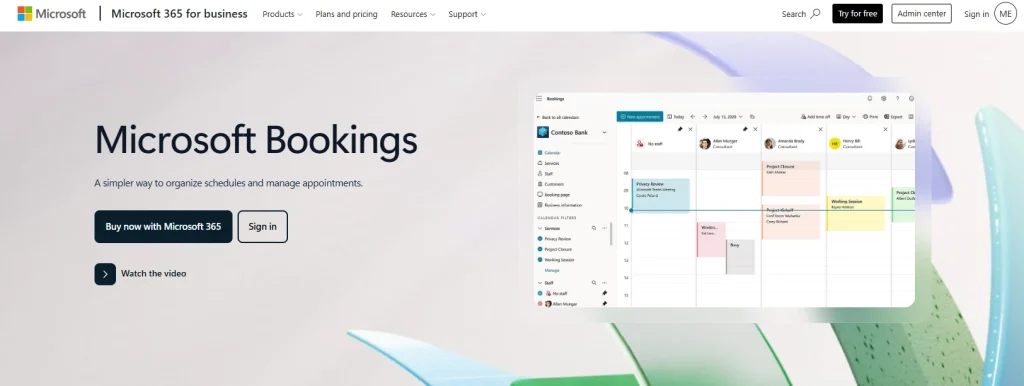
G2 rating: 3.8
Microsoft Bookings is a lightweight scheduling tool embedded in Microsoft 365. It is ideal for teams seeking simple appointment management.
Key Features
- Seamless Microsoft 365 calendar integration
- Customizable appointment and service settings
- Real-time availability with booking sync
- Customer self-service appointment scheduling pages
- Multi-industry scheduling for service teams
Pros
- Works in Microsoft ecosystem
- Easy to use
- Quick setup
Cons
- Limited automation
- Basic customization
Pricing
As per included in Microsoft 365
Website: https://www.microsoft.com/en-in/microsoft-365/business/scheduling-and-booking-app
7. Appointlet

G2 reviews: 4.4
Appointlet is a streamlined scheduling platform designed for teams that need effective appointment management without complex features. Its straightforward setup gets your booking page live in minutes, making it ideal for small businesses and independent professionals who want a no-frills solution.
Key Features
- Customizable branded booking page experience
- Automated invites and meeting reminders
- Team scheduling with fair distribution
- Calendar syncing with Google and Outlook
- Website embedding for direct bookings
Pros
- Simple and fast
- Easy setup
- Budget-friendly
Cons
- Limited enterprise routing
- Basic integrations
Pricing
Offers free plan upto 5 members, and paid plans start from $9/month/member
Website: https://www.appointlet.com/
8. Acuity Scheduling

G2 rating: 4.9
Acuity Scheduling is a trusted platform for service-based businesses that need a seamless booking experience for their clients. It handles everything in one integrated system.
Key Features
- Offers branded online appointment booking pages
- Sends automated reminders to reduce no-shows
- Secure payment and invoice processing
- Calendar sync across multiple platforms
- Custom intake forms for clients
Pros
- Very user-friendly
- Strong automation
- Reliable system
Cons
- Not built for enterprise routing
- Limited sales use cases
Pricing
Paid plans start from $16/month
Website: https://acuityscheduling.com/
9. SimplyBook.me
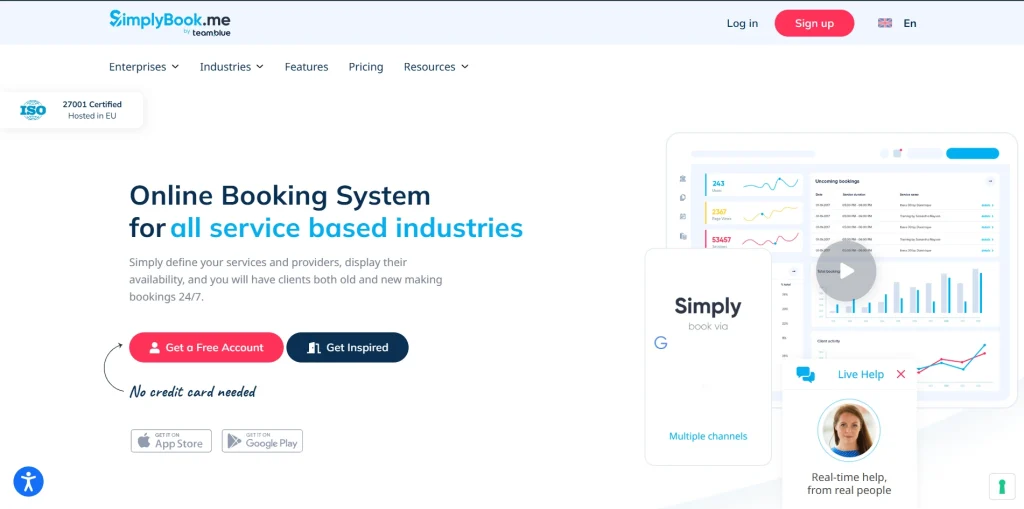
G2 rating: 4.4
SimplyBook.me supports multi-service booking and is used by businesses with complex service offerings.
Key Features
- Multi-channel online appointment booking system
- Automated WhatsApp SMS email notifications
- Custom booking website with templates
- Secure online payments and deposits support
- Client and admin mobile applications
Pros
- Highly flexible
- Good for service businesses
- Customizable
Cons
- Can feel complex
- Less sales-focused
Pricing
Offers a free plan, and the paid plan starts from 11.9 Euros/ month
Website: https://simplybook.me/en/
10. YouCanBook.me
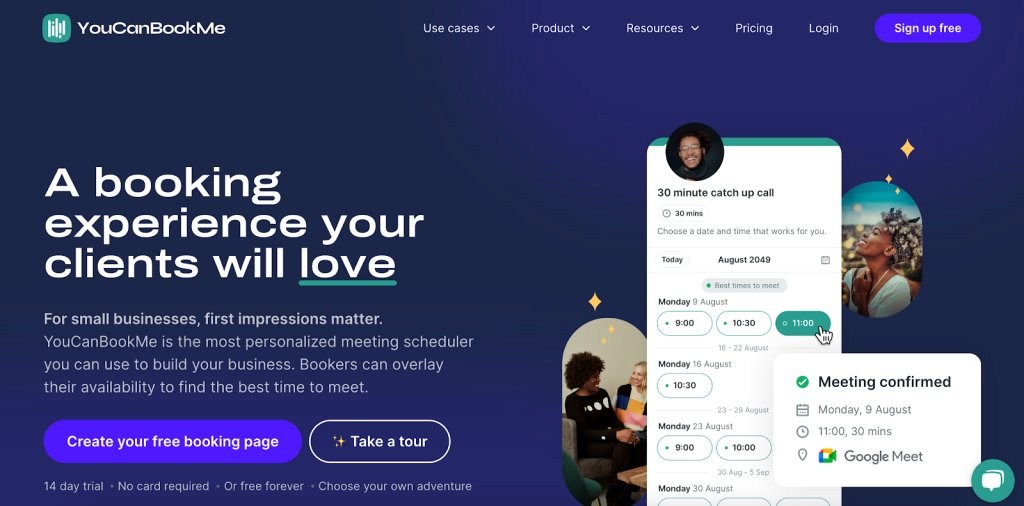
G2 rating: 4.7
YouCanBook.me is a simple scheduling tool that helps users share availability and book meetings easily.
Key Features
- Fully customizable branded booking pages
- Automated confirmations, reminders, and follow-ups
- Multi-calendar sync for availability management
- Integrated payments via Stripe and PayPal
- CRM and analytics integration support
Pros
- Very simple
- Fast setup
- Clean UI
Cons
- Limited enterprise features
- Basic routing
Pricing
Offers a free plan, and the paid plan starts from $7.20/month
Website:https://youcanbook.me/
See How LeadAngel Can Transform Your Lead Management
Curious to experience the power of LeadAngel firsthand? We understand!
We're offering a complimentary trial so you can explore LeadAngel's features at your own pace. Once you request a free trial, we'll schedule a personalized onboarding session to ensure you maximize the value of LeadAngel.
Ready to take your lead management strategy to the next level? Request your LeadAngel trial today!
In addition to exploring the platform, we recommend visiting our LeadAngel Help Center for in-depth guidance. Our dedicated customer support team is also available to answer any questions you may have at sales@leadangel.com.
FAQs
Before choosing software for managing schedules in an enterprise, here are some features to look for: automated routing, CRM integrations, calendar synchronization, multi-timezone support, reporting, and centralized administration.
Calendar scheduling software primarily manages availability. It helps prevent conflicts and keeps calendars updated across different systems. Meeting scheduling software takes things further. It helps coordinate the entire booking process. The software is in charge of picking the representative to send reminders and update customer relationship management records. These days, most new enterprise scheduling software includes these two things, so it does not matter much as it used to that they are different.
B2B businesses have started using multiple systems that manage their customer interactions, sales activities, and internal collaboration. Scheduling software needs to fit into that environment. That means connecting with CRM platforms, calendar applications, video conferencing tools, and other systems teams use every day. Meeting data, availability, and customer information sync together.
Online scheduling allows prospects to book a meeting by themselves through a booking page or scheduling link. Offline scheduling is different. A sales rep, SDR, or coordinator handles the booking instead. Most enterprise teams use both approaches. Self-service booking works well when speed matters. Rep-assisted scheduling works better when coordination is more involved. Good scheduling software supports both without creating separate processes for each team.
Enterprise scheduling tools sync your calendar with your CRM automatically.They intelligently log every meeting. It keeps customer records updated and creates a unified view of customer interactions. It provides the information on the team's unavailability without checking it manually.
The easiest place to start is time. Track the following metrics for evaluating return on investment. Lead response time, Meetings booked, Conversion rates and administrative time saved. A shorter time between lead capture and booked meeting is often one of the clearest signs of ROI.
Yes. Multi-timezone scheduling is a core requirement for b2b companies that operate across different regions. Enterprise scheduling platforms identify sales reps' time zones and display available meeting times. When evaluating the best enterprise scheduling software, multi-timezone support is one of the first capabilities prospects search for.