
TL;DR
- Best for enterprise level lead routing & lead-to-account matching: LeadAngel
- Best for large business commission automation: Xactly Incent
- Best for flexible compensation plans: CaptivateIQ
- Best for territory and quota planning: Anaplan
- Best for large enterprise sales operations: Varicent
- Best for real-time commission visibility: Spiff
- Best for complex commission calculations: Performio
- Best for Sales commission transparency: Driven
- Best for enterprise compensation strategy: Beqom
- Best for sales coaching and motivation: Ambition
- Best for sales readiness and training: Mindtickle
- Best for enablement content delivery: Brainshark
- Best for gamification and rep engagement: Spinify
Sales teams are expected to move fast. Close more deals. Hit bigger targets. Somehow do all of that while half the day disappears into CRM updates, spreadsheets, reporting tabs, and tasks nobody remembers volunteering for.

That’s the strange part of modern sales: everyone talks about performance, but very little of the day actually feels built for performing. Studies keep showing the same thing, reps spend only 28% of their time selling, while everything around selling keeps expanding.
And leadership? Leadership usually sees the numbers first. Revenue targets. Forecast calls. Quota coverage. Pipeline ratios. From that altitude, performance looks measurable and manageable. But at the rep level, it often feels like chasing clarity through disconnected systems.
That disconnect matters more than people admit. A target can be clear and still difficult to execute when lead ownership changes mid-cycle, incentive plans live in another system, and performance data arrives too late to influence behavior.
The good news is that a better structure usually changes the mood of a sales team faster than any other strategy deck ever will. When performance data becomes visible, incentives become understandable, and decisions stop living inside spreadsheets, people sell with less friction.
That is exactly why sales performance management tools have become harder to ignore. Not because sales suddenly need more dashboards, but because good systems remove enough operational noise for actual selling to happen again.
What Is Sales Performance Management?
Sales performance management (SPM) is the process of tracking, managing, and improving a sales team’s performance. It involves setting quotas, assigning sales territories, and using sales performance software to analyze results. The goal is to help sales teams stay on track, close more deals, and grow revenue.
Top Sales Performance Management Tools In One View
| # | Software | Best For | Core Capabilities | Starting Pricing |
|---|---|---|---|---|
| 1 | LeadAngel | Lead routing & data management | Lead-to-account matching, routing automation, deduplication, meeting scheduling, CRM integrations | Custom pricing |
| 2 | Everstage | Enterprise incentive compensation | No-code comp plan builder, payout automation, quota & territory planning, real-time earnings visibility | $10,000+ per year |
| 3 | Qobra | SMB & mid-market compensation management | Commission automation, quota management, real-time earnings tracking, CRM integrations | €39 per user per month |
| 4 | Xactly Incent | Enterprise commission automation | Incentive compensation management, quota tracking, and analytics dashboards | $40–$60 per user/month |
| 5 | CaptivateIQ | Complex commission plans | Flexible commission models, real-time dashboards, finance & sales collaboration tools | $25–$60 per user/month |
| 6 | Anaplan for Sales | Enterprise sales planning | Territory planning, quota setting, forecasting, and incentive management | Custom pricing |
| 7 | Varicent | Large enterprise sales teams | Commission automation, quota planning, territory optimization, analytics | $56/user/month |
| 8 | Spiff | Real-time commission tracking | Commission visibility, flexible compensation plans, and CRM integrations | $ 75 USD/User/Month |
| 9 | Performio | Complex commission calculations | Commission automation, performance analytics, and mobile earnings visibility | Custom pricing |
| 10 | Driven | Sales commission transparency & AI-powered compensation design | AI-generated comp plans, automated commission calculations, rep-facing transparency, real-time commission visibility, smart AI suggestions, CRM integrations | Free trial available; paid plans custom-priced |
| 11 | Beqom | Enterprise compensation management | Incentive management, analytics, quota & territory management | (approx. $56,000+) per year |
| 12 | Ambition | Sales performance coaching | Real-time dashboards, gamification, coaching programs | Custom pricing |
| 13 | Mindtickle | Sales readiness & training | Sales training modules, coaching tools, content management | $92,000 annually |
| 14 | Brainshark | Sales enablement training | On-demand training, video coaching, interactive content | $5/user/month |
| 15 | Spinify | Sales gamification & motivation | Leaderboards, performance tracking, gamification challenges | Starts around $4 per user/month (SoftwareSuggest) |
15 Best Sales Performance Management Software
Managing sales teams and driving growth requires the right tools. These solutions simplify workflows and keep teams focused on results.
Below are the top tools to support your team’s success:
1. LeadAngel
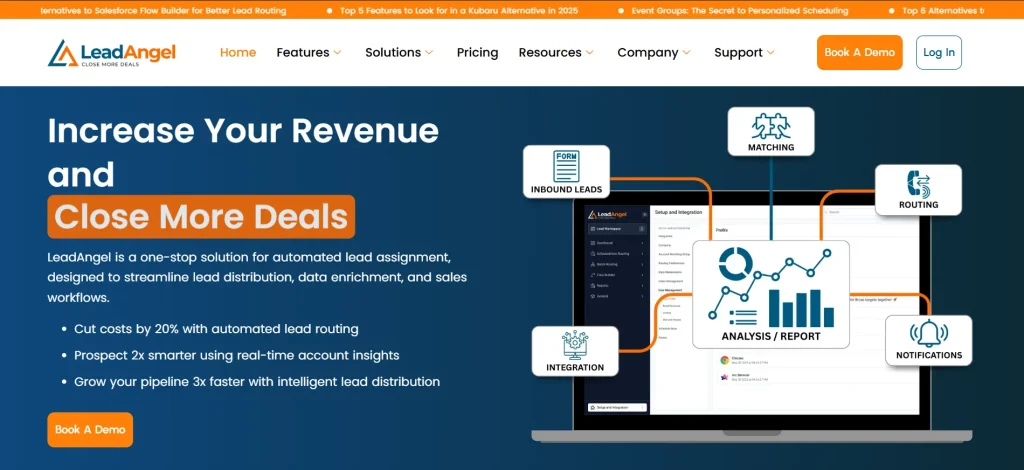
LeadAngel is a sales performance management tool that improves lead routing, data management, and team coordination to help sales teams achieve their goals.
LeadAngel allows businesses to manage leads efficiently, maintain accurate records, and assign opportunities to the right person.
It resolves common pain points such as duplicate data and delayed handoffs, enabling sales teams to work more effectively and focus on converting leads into customers.
Key Features
- Lead-to-account matching—Matches leads to the correct accounts to reduce errors and maintain accurate records.
- Calendar scheduling—Simplifies meeting bookings with automated reminders to keep teams organized.
- Lead routing—Routes leads to the appropriate team members based on predefined criteria.
- On-the-spot handoff—Enables immediate lead transfers between team members for faster follow-ups.
- Offline scheduling—Allows scheduling and lead management without internet access, ideal for field teams.
- Data deduplication—Cleans up duplicate records to ensure accurate and efficient data management.
- Reporting and analytics—Offers insights into sales activities, helping managers adjust strategies effectively.
- Effortless integration—Connects with CRMs like Salesforce, HubSpot, and Microsoft Dynamics for a unified workflow.
Pricing Plans
Professional: core routing, data cleanup, and CRM sync for growing teams needing streamlined lead management.
Professional Plus: advanced routing, deeper automation, ABM enhancements, and expanded reporting for high scale sales organizations requiring greater customization and operational control.
2. Everstage
Source: Everstage.com
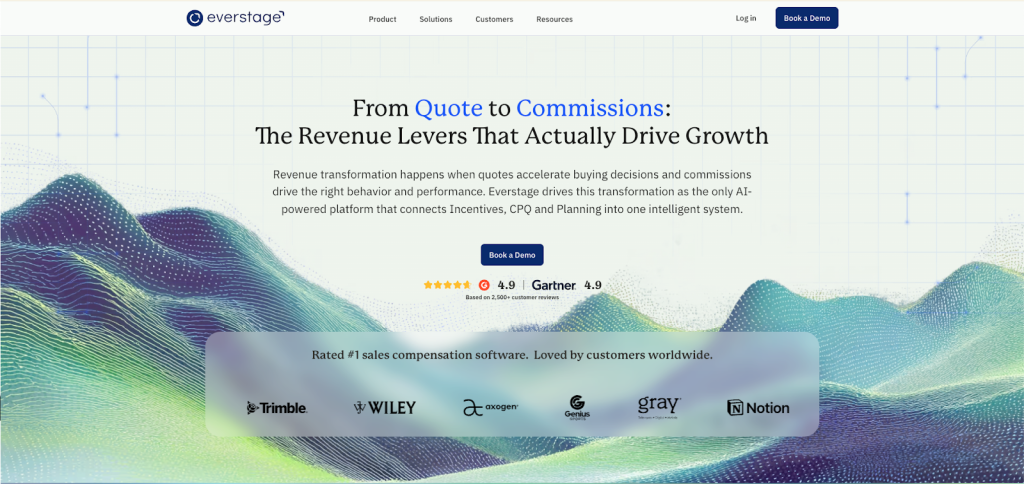
Everstage is a modern, agentic Incentive Compensation and Sales Performance Management (SPM) platform tailored for mid-market and enterprise teams. It offers no-code plan creation, automated workflows, and real-time visibility, helping revenue, finance, and ops leaders streamline compensation processes.
The platform supports teams across industries with scalable, transparent, and flexible solutions designed to align performance with pay. Everstage was named a Strong Performer in sales performance management metrics in The Forrester Wave 2025 and is recognized by analysts for its usability and speed.
Key Features:
- No-Code Plan Builder—Create complex comp plans fast, no code or spreadsheets needed.
- Automated Workflows—Handle payout approvals and audits with ease through automated processes.
- Real-Time Visibility—Reps track earnings live, boosting trust and performance instantly.
- Custom Dashboards & Reporting – Tailor dashboards for every stakeholder, from reps to revenue leaders, with granular reporting that drives clarity and action
- Quota & Territory Management—Dynamically assign quotas and manage territories with built-in versioning and approvals, ensuring precision at scale.
- Plan Versioning & Audit Trails—Maintain compliance and track every change with robust version control and detailed audit logs.
Best for
Everstage is ideal for mid market and enterprise revenue teams with complex plans and multiple roles. It works well for organisations that see compensation and transparency as a key part of sales enablement and want to move away from spreadsheet driven commission processes.
Why choose Everstage
Everstage helps you turn compensation from a back office process into a front line enablement tool. Reps trust their numbers, understand their path to over performance, and stay focused on the deals that matter most, while leaders get accurate, timely insight into performance and payouts.
Pricing
Everstage uses a custom pricing model based on the number of payees, plan complexity, and integrations. Most teams start with a discovery and demo process to scope the right package for their plans and tech stack. All implementations are handled in-house with white glove onboarding and ongoing support, so you do not need third party consultants or to worry about hidden service fees.
3. Qobra
Source: Qobra.co

Qobra is a modern Sales Performance Management (SPM) and Incentive Compensation Management platform designed for fast-growing and mid-market sales organizations. It helps revenue, finance, and sales operations teams automate commissions, manage quotas, and give sales reps real-time visibility into their earnings.
Built to replace spreadsheets and manual sales performance management processes, Qobra centralizes compensation plans, performance tracking, and payouts in one intuitive platform. Sales teams always know where they stand, while finance teams maintain control, accuracy, and compliance.
Qobra is especially known for its ease of use, rapid implementation, and strong alignment between sales performance and compensation. It is highly rated across G2, Capterra, GetApp, and SoftwareReviews for usability, transparency, and customer support.
Key Features
- Incentive Compensation Management—Automates commission calculations across complex plans, reducing errors and eliminating manual spreadsheets.
- Real-Time Commission Visibility—Sales reps can track earnings, accelerators, and goal progress live, improving trust and motivation.
- Quota & Target Management—Easily define, assign, and track quotas by role, territory, or plan with full versioning and approval workflows.
- Flexible Compensation Plans— variable pay structures including commissions, bonuses, SPIFFs, accelerators, and multi-role plans.
- Approval Workflows & Audit Trails—Built-in validation, approval flows, and audit logs ensure compliance and payout accuracy.
- Performance Reporting & Dashboards—Clear dashboards for sales, finance, and leadership with drill-down reporting on performance and payouts.
- CRM & Data Integrations—Seamlessly integrates with CRMs like Salesforce and HubSpot, as well as payroll and finance tools, ensuring a single source of truth.
- Fast Implementation—No heavy IT dependency, allowing teams to go live quickly without long deployment cycles.
Best for
Qobra is ideal for SMBs, scale-ups, and mid-market companies with growing sales teams that need reliable, transparent, and easy-to-manage sales compensation. It works particularly well for organizations moving away from spreadsheets and looking for faster setup than traditional enterprise SPM tools.
Why choose Qobra
Qobra focuses on making sales compensation simple, transparent, and trusted. Reps always know how they are paid and what drives their earnings, while finance teams save time, reduce disputes, and close commissions faster. Its balance of flexibility and usability makes it a strong choice for teams that want powerful SPM capabilities without enterprise-level complexity.
Pricing
Qobra offers custom pricing based on the number of users, compensation complexity, and required integrations. Most companies start with a demo to tailor the sales performance management platform to their compensation plans, followed by guided onboarding to ensure a fast and smooth rollout.
4. Xactly Incent
Source: Xactlycorp.com
Xactly Incent helps businesses track sales performance and manage commissions. It calculates payouts instantly, so sales teams always know what they’ve earned.
Managers can create custom incentive plans to keep teams motivated. The sales performance management platform also provides data on compensation trends, helping businesses adjust strategies as needed.
Xactly Incent is useful for larger sales teams; however, setting up complex commission plans takes time, and the interface isn’t the easiest to navigate. Smaller businesses may find it too advanced for their needs.
Key Features
- Incentive compensation management calculates and tracks commissions automatically.
- Quota management—Monitors quotas to support performance tracking.
- Analytics and reporting – Offers insights into sales and compensation metrics.
Pricing Plan: Starts at $40–$60 per user/month
Designed for enterprise commission automation, with pricing typically varying by team size, feature depth, and contract structure.
5. CaptivateIQ
Source: Captivateiq.com
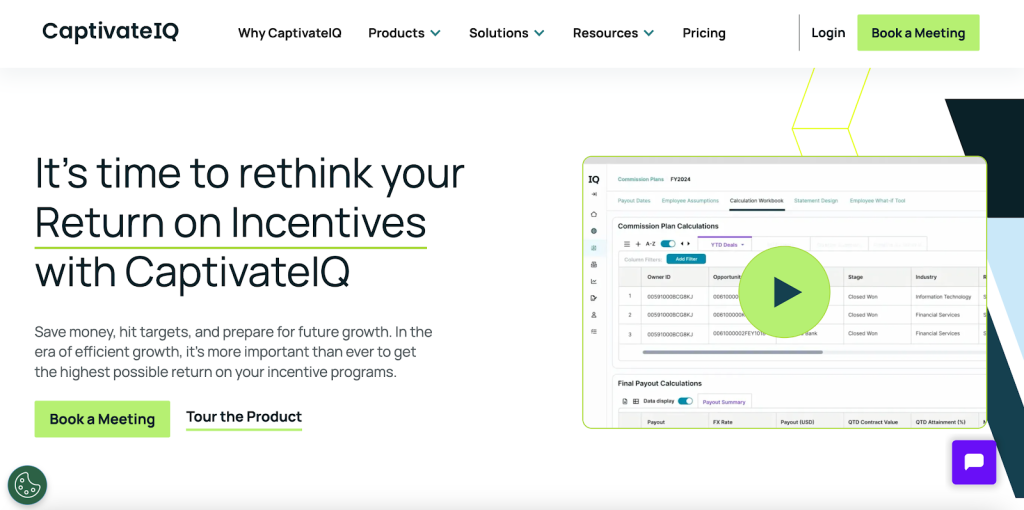
CaptivateIQ helps businesses track sales performance and manage commissions. It gives sales and finance teams real-time earnings data, so reps always know what they’ve earned.
Managers can create custom incentive plans to keep teams motivated. The platform simplifies commission tracking, helping teams focus on selling instead of fixing errors.
CaptivateIQ takes time to set up, especially for complex pay structures. Some users say customer support is slow. Smaller teams may find it more than they need. But for businesses that rely on detailed commission tracking, it’s a decent option.
Key Features
- Commission management – Supports diverse incentive structures to align with sales goals.
- Real-time dashboards – Provides up-to-date earnings data for sales representatives.
- Team collaboration – Enables improved communication between finance and sales teams.
Pricing Plan: Starts at $25–$60 per user/month
Pricing depends on compensation complexity, integrations, and reporting requirements.
6. Anaplan for Sales
Source: Anaplan.com
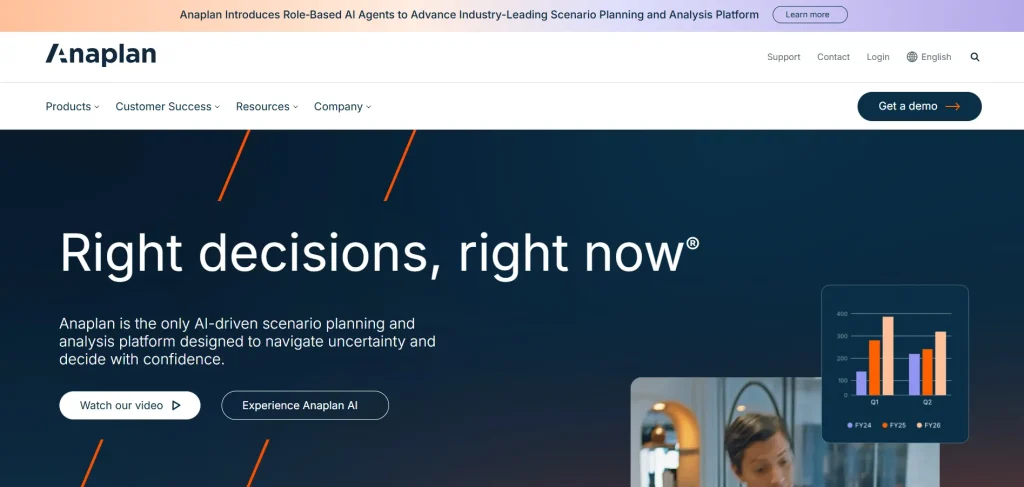
Anaplan for Sales helps teams plan and manage sales operations. It connects sales goals with real-time data, so managers can adjust quotas, optimize territories, and track incentives. The platform’s forecasting tools help businesses predict trends and make smarter decisions.
Anaplan is not easy to set up. It takes time, and teams often need training. Smaller businesses may struggle with the amount of data required. It is suitable for large companies with structured sales plans. For those needing a simpler tool, it may feel too complex.
Key Features
- Territory and quota planning—optimizes territory distribution and sets realistic quotas.
- Sales forecasting—Provides predictive insights to guide decision-making.
- Incentive compensation management—Tracks and manages sales incentives effectively.
Pricing Plan: Custom pricing
Pricing is quote-based and usually tailored to enterprise planning scope, number of users, and modules selected.
7. Varicent
Source: Varicent.com
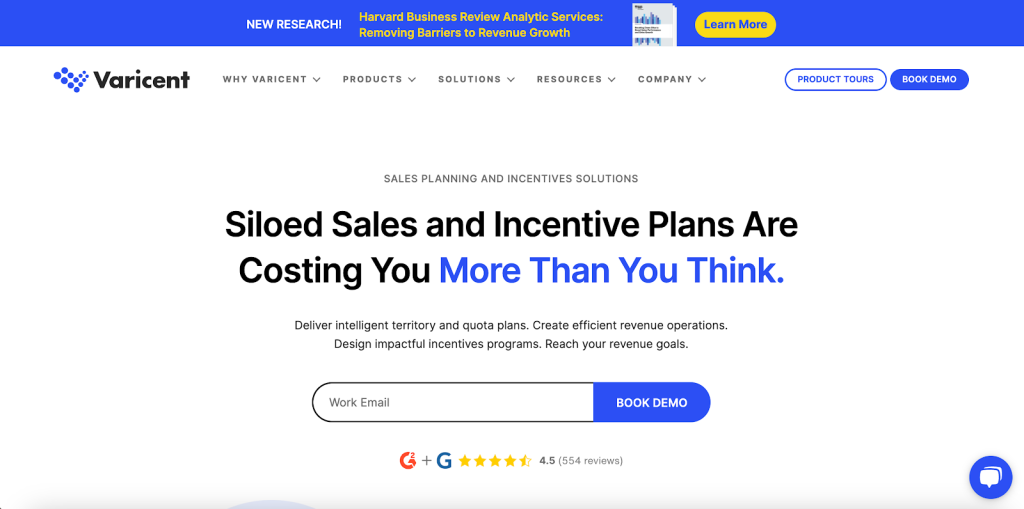
Varicent helps sales teams manage incentives, track performance, and plan quotas. It automates commission payouts, reducing errors and saving time.
The platform’s analytics tools help managers spot trends and adjust strategies. With territory management, teams can assign reps to the right regions for better coverage.
Still, Varicent takes time to set up. The sales performance management system requires training, and some users find it complicated. Smaller teams may not need all the advanced features. It is suitable for large businesses with structured sales plans. For those looking for a simpler tool, other options may be a better fit.
Key Features
- Incentive compensation management – Automates commission calculations and ensures accurate payouts.
- Territory management – Optimizes territory assignments for better coverage.
- Quota planning – Helps set achievable sales targets aligned with organizational objectives.
Pricing Plan: Around $56 per user/month
Enterprise-focused pricing with additional cost depending on analytics and territory planning modules.
8. Spiff
Source: Spiff.com
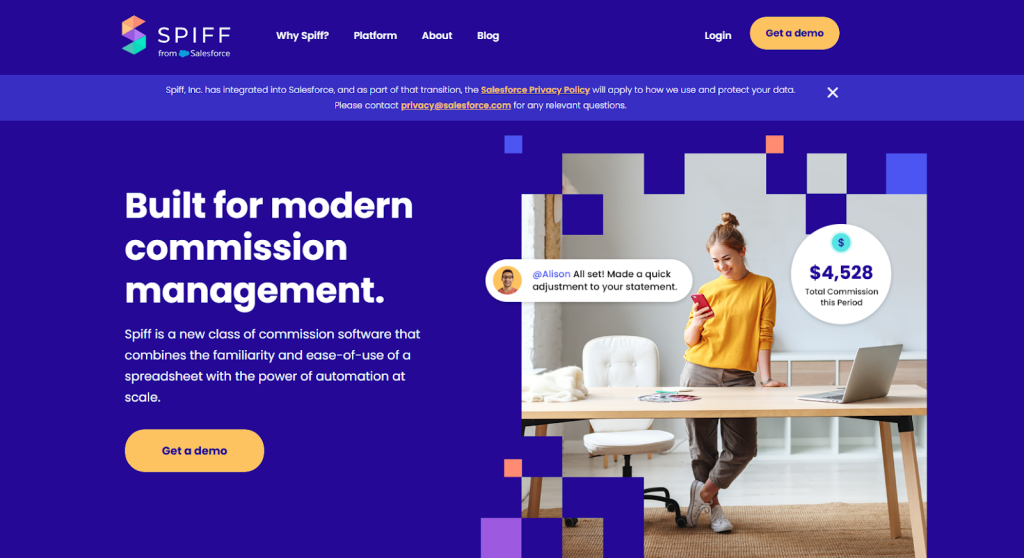
Spiff helps sales teams track commissions in real time. Reps can see their earnings instantly, so there’s no guessing. Businesses can set up different commission plans to match their sales goals. The platform also connects with CRM and ERP systems, keeping everything in one place.
Spiff takes time to set up. Complex commission plans can be tricky to configure. Also, some users find the interface confusing at first. It works best for larger teams that need detailed tracking.
Key Features
- Real-time commission tracking—Displays up-to-date earnings data for sales representatives.
- Customizable plans—Supports a variety of commission structures to fit different sales strategies.
- Integrations—Connects with popular CRM and ERP systems for effortless data synchronization.
Pricing Plan: $75 USD per user/month
Includes real-time commission visibility and CRM-connected compensation tracking.
9. Performio
Source: Performio.co
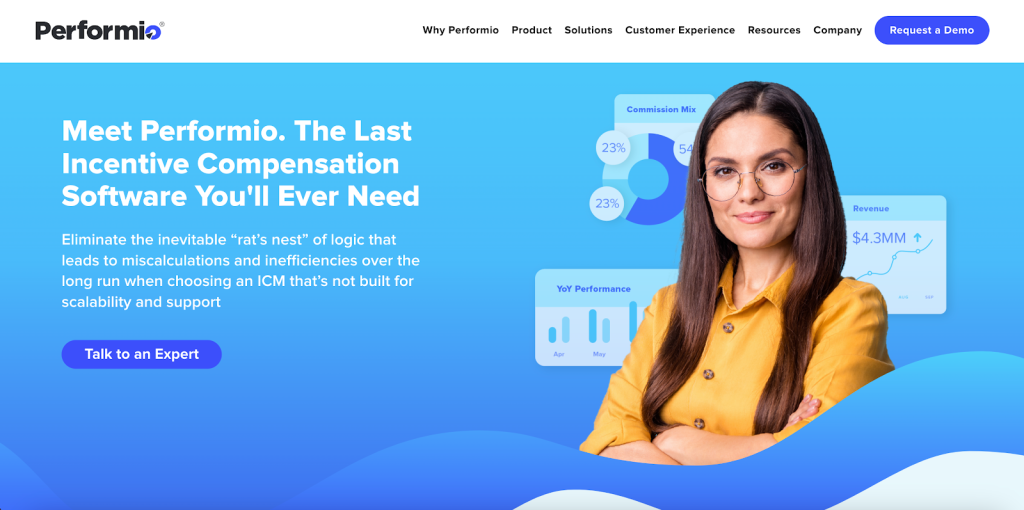
Performio helps sales teams manage commissions and track performance. It is one of the best sales performance management examples. It automates complex calculations, so reps get accurate payouts without extra work.
Managers can see sales trends and team performance through built-in analytics. With mobile access, reps can check earnings anytime, keeping them informed and motivated.
Performio takes time to set up. Businesses with unique commission plans may need extra adjustments. Some users find the reports hard to customize. It works best for teams that need detailed commission tracking.
Key Features
- Commission calculation – Automates complex commission processes to save time and improve accuracy.
- Performance analytics – Offers detailed reports on sales metrics and compensation outcomes.
- Mobile access – Allows sales representatives to view performance and earnings on the go.
Pricing Plan: Custom pricing
Pricing is usually provided based on compensation complexity and deployment size.
10. Driven
Source: driven.work
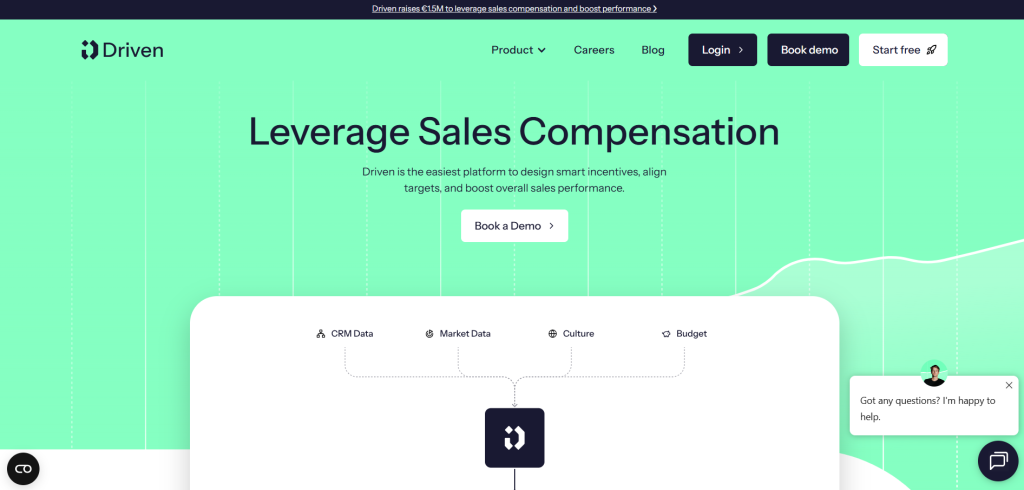
Driven is a modern sales commission and performance software built for companies that want to replace spreadsheets with smart, automated compensation management. Where most tools focus on calculating commissions after the fact, Driven goes a step further by using AI to help teams design compensation plans that actually drive the right behavior; before a single deal is closed.
It’s particularly well-suited for sales leaders and revenue operations teams who want full visibility into commission spending, automated calculations, and crystal-clear comp plan communication for their reps.
Key Features
AI-Generated Compensation Plans — Driven’s AI analyzes your CRM data, market benchmarks, cultural dynamics, and budget constraints to suggest compensation plans tailored to your company’s situation. No more guessing what incentive structure will work.
Automated Commission Calculations — Say goodbye to manual spreadsheets. Driven automatically calculates commissions and payouts, eliminating errors and saving hours of admin work every month.
Rep-Facing Transparency — Comp plans are automatically turned into clear, visual wiki pages with FAQs, so every sales rep understands exactly how they earn and what it takes to overperform. No more “black box” compensation.
Real-Time Commission Visibility — Managers get full control over commission spend with dashboards that show the financial impact of compensation decisions as they happen.
Smart AI Suggestions — Driven proactively surfaces missed revenue opportunities, flags budget issues before they escalate, and provides benchmark alerts to keep compensation strategy competitive.
CRM Integrations — Connects seamlessly with HubSpot, Salesforce, Pipedrive, and Microsoft Dynamics, keeping compensation data in sync with your sales pipeline.
Best For
Driven is ideal for growing B2B sales teams; particularly those in the SMB to mid-market range; that are struggling with manual commission tracking, lack of rep transparency, or misaligned incentive structures. It’s especially powerful for companies looking to tie compensation strategy directly to revenue performance, rather than treating commissions as a back-office finance task.
Why Choose Driven
Most compensation tools solve the calculation problem. Driven solves the alignment problem. By making compensation plans visually clear to every rep and using AI to recommend smarter incentive structures, it helps sales teams close more of the right deals; not just more deals. Teams using Driven report higher rep motivation, fewer commission disputes, and more strategic use of incentive budgets.
Pricing
Driven offers a free trial to get started. Paid plans are available for teams that need full automation, AI-powered plan design, and deeper analytics. A free compensation audit is also available for teams that want expert advice on improving their current incentive setup before committng to a platform.sion visibility.
11. Beqom
Source: Beqom.com
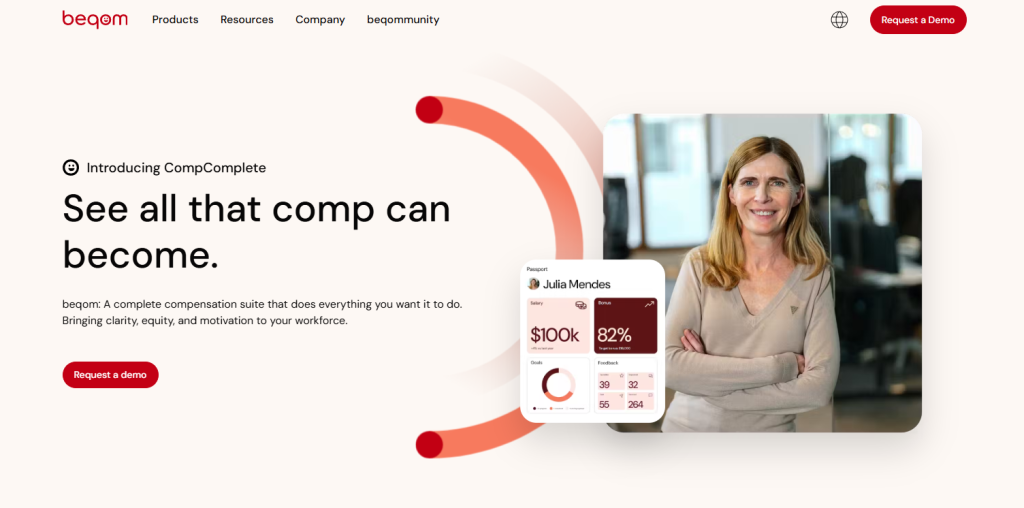
Beqom helps businesses manage sales incentives and track performance. It automates commission payouts, so reps get paid on time.
Managers can plan quotas, adjust compensation, and use data to make better decisions. The platform’s analytics help teams spot trends and improve sales strategies.
Beqom takes time to set up. Some users find the interface difficult to navigate. It works best for large businesses that need a structured way to manage incentives.
Key Features
- Incentive compensation management—Automates commission calculations to guarantee accurate payouts.
- Performance analytics—Provides insights into sales metrics to inform strategic decisions.
- Quota and territory management – Assists in setting and monitoring sales targets and territories.
Pricing Plan: Starts around $56,000+ per year
Annual enterprise contracts usually include compensation, analytics, and territory modules.
12. Ambition
Source: Ambition.com
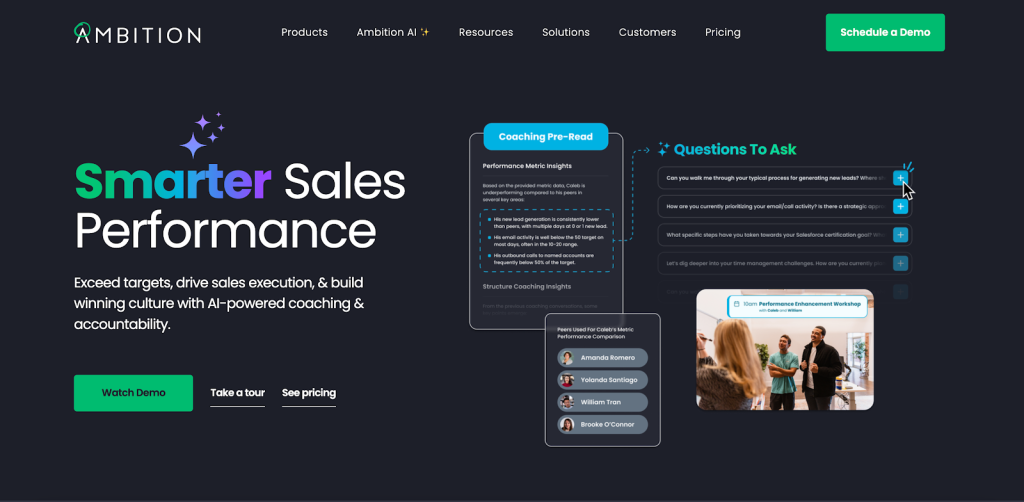
Ambition helps sales teams stay motivated with performance tracking and gamification. Managers get real-time dashboards to track progress and set goals. Coaching tools help reps improve their skills. Leaderboards and contests keep teams engaged and push them to perform better.
But ambition isn’t for everyone. Setting up gamification takes time, and not all teams find it useful. The platform needs regular updates to keep challenges fresh. It is suitable for teams that need extra motivation. Businesses focused only on analytics may prefer a different tool.
Key Features
- Performance dashboards—Displays real-time metrics to monitor team progress.
- Coaching programs—Organize structured coaching sessions for consistent development.
- Gamification – Encourages competition among sales teams through leaderboards and contests.
Pricing Plan: Custom pricing
Pricing depends on coaching features, gamification layers, and dashboard deployment.
13. Mindtickle
Source: Mindtickle.com
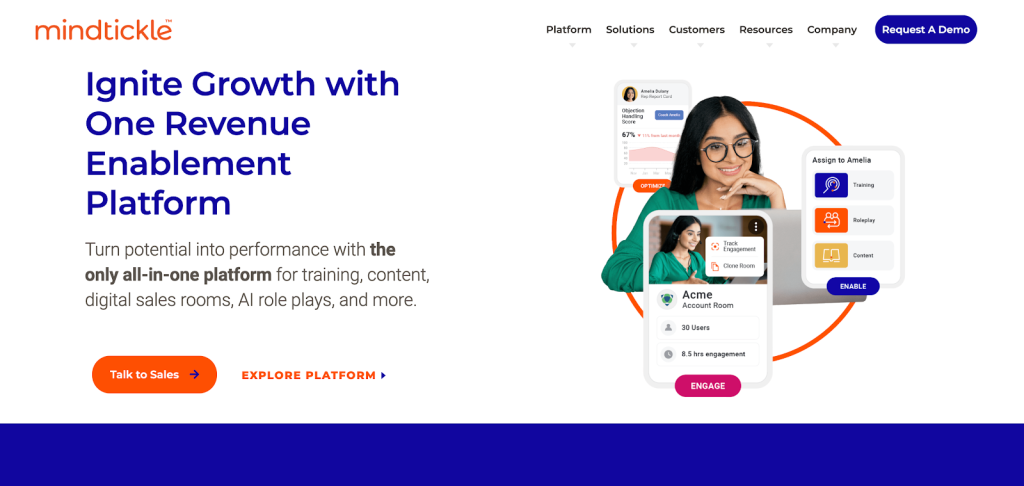
Mindtickle helps sales teams sharpen their skills through training and coaching. It offers interactive learning modules that prepare reps for real customer conversations.
Managers can track progress, provide feedback, and make sure teams stay ready for any sales situation. The platform also organizes sales materials, keeping everything in one place.
MindTickle works well for training, but it requires time to set up. Some users find the learning modules repetitive, and customizing content can be tricky. It’s a suitable tool for companies focused on ongoing sales education, but teams looking for quick, one-time training might prefer a simpler sales performance management solution.
Key Features
- Sales training—Provides engaging modules to develop sales skills and product knowledge.
- Coaching tools – Supports feedback and development through structured coaching sessions.
- Content management—organizes and delivers sales materials for easy access and consistent messaging.
Pricing Plan: Around $92,000 annually
Enterprise annual pricing generally includes training, readiness, and coaching modules.
14. Brainshark
Source: Bigtincan.com
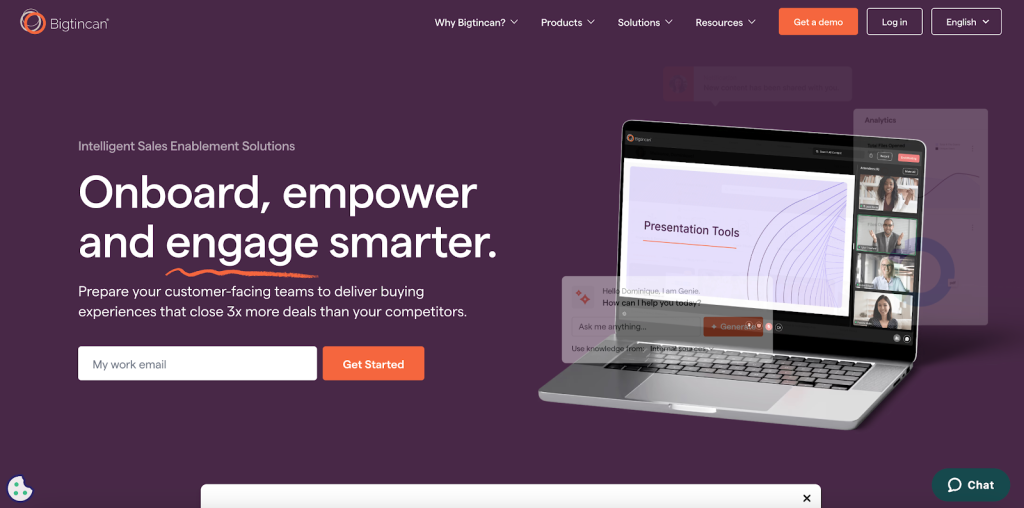
Brainshark helps sales teams improve through training and coaching. It offers on-demand learning modules that help reps sharpen their skills. The platform also includes video-based coaching so managers can review performance and give personalized feedback. Businesses use it to keep messaging consistent across teams.
Brainshark can be difficult to set up. Some users say the interface feels outdated, and customizing training content can be a challenge. It works well for teams that need structured learning, but those looking for a more flexible training tool might want other options.
Key Features
- Sales training—Delivers on-demand training modules to improve sales skills.
- Coaching tools – Facilitates video-based coaching and assessments for continuous development.
- Content authoring—Enables the creation of interactive presentations and learning materials.
Pricing Plan: Starts at $5 per user/month
Lower entry pricing often applies to basic training and content delivery tiers.
15. Spinify
Source: Spinify.com
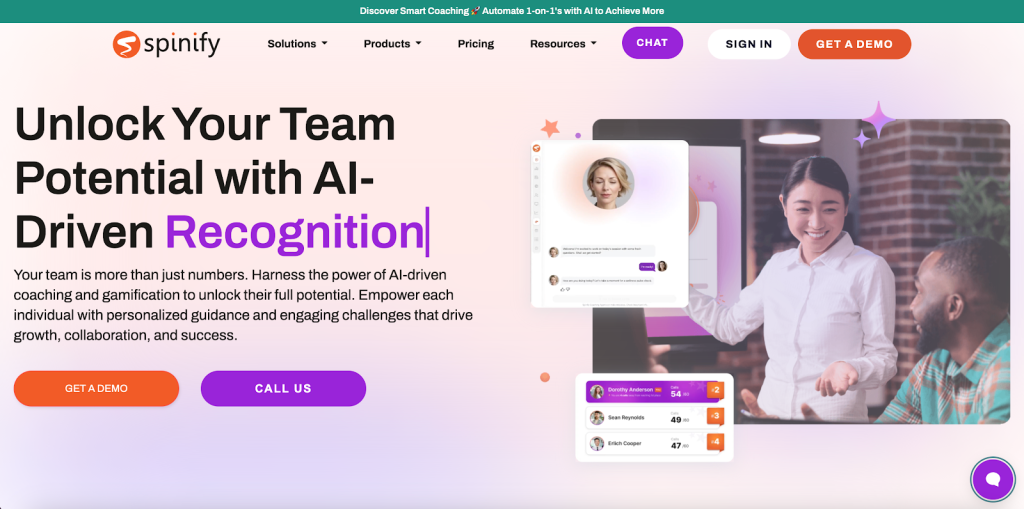
Spinify boosts motivation with gamification and performance tracking. It turns sales goals into challenges, rewarding reps for hitting targets. Leaderboards create friendly competition, helping teams stay engaged. Managers use it to track key metrics and recognize top performers.
Spinify is fun, but it’s not for everyone. Some teams may find the game elements distracting rather than motivating. Setting up leaderboards and challenges also takes time. It is helpful for teams that thrive on competition, but those who prefer a more traditional approach may want a different tool.
Key Features
- Gamification—Adds game elements to sales activities to boost engagement.
- Leaderboards—Displays rankings to encourage healthy competition among team members.
- Performance tracking key sales metrics to evaluate progress and success.
Pricing Plan: Starts around $4 per user/month
Affordable entry pricing for leaderboard-based motivation and gamified performance tracking.
How to Choose the Right Sales Performance Management Solution for Your Business
Finding the right sales performance management tool depends on your team’s specific needs. Each tool offers unique features, but for B2B companies, LeadAngel stands out. It addresses key challenges such as lead routing, maintaining accurate data, and improving team coordination.
Here’s a guide to help you evaluate and select the right tool:
Assess Team Size and Complexity
Smaller teams prioritize simplicity, while larger organizations may require advanced features.
LeadAngel’s customizable lead routing and lead-to-account matching make it suitable for both small and complex sales operations, ensuring precise assignment and efficient workflows.
Evaluate Core Features
Determine the essential features your business needs. LeadAngel offers:
- Lead routing – Automatically assigns leads based on criteria like geography or product focus.
- Data cleanup – Removes duplicates and ensures accurate reporting.
- Calendar scheduling – Simplifies meeting coordination for sales teams.
Consider Integration Needs
Smooth integration with your existing CRM is important. LeadAngel integrates directly with platforms like Salesforce, providing consistent data flow and reducing manual errors.
Budget and Pricing Structure
Understand the tool’s pricing structure. LeadAngel offers transparent and scalable plans, including the Professional and Professional Plus plans. You can choose a plan based on the number of people in your team and the features you need.
Scalability and Support
Opt for a tool that adapts as your business grows. LeadAngel’s advanced features ensure scalability, while its support team is available to assist with implementation and ongoing optimization.
Sales Performance Management Examples That Show What Actually Changes
The concept sounds bigger than it is.
Most of the time, it shows up in ordinary sales decisions—who gets paid more, who owns which accounts, and where performance starts slipping.
1. The “Accelerated Payout” Example (Incentive Compensation)
A SaaS company wants more sales attention for its new AI product. A flat commission no longer helps because reps naturally prioritize easier deals, so the compensation plan changes.
The Plan: Standard products continue at 8% commission, but once a rep reaches quota, the AI product jumps to 15%. The reward is tied to timing, not just volume.
The SPM Benefit: Before sending a proposal, the rep can check a payout calculator and immediately see how one additional product line changes the paycheck. That visibility often influences the deal itself.
2. The “Fair Territory” Example (Territory Planning)
A medical device company expands into a new region and realizes that geographic boundaries look fair only on paper. One rep gets major hospitals, another gets smaller clinics, and the revenue potential is nowhere close.
The Plan: Territories are rebuilt around market opportunity instead of zip codes, using account value and demand data to balance potential more realistically.
The SPM Benefit: Historical sales patterns and account size help create territories where both reps have a comparable path to target, which usually prevents frustration before it turns into attrition.
3. The “Course Correction” Example (Performance Coaching)
A senior rep at a logistics company starts missing numbers for two quarters in a row. At first glance, it looks like a closing problem, but the data says otherwise.
The Plan: The manager reviews the dashboard and finds that close rates remain strong, while pipeline coverage has fallen well below expected levels.
The SPM Benefit: Instead of broad feedback, the next goal focuses only on lead generation. The system tracks that one correction until pipeline health returns to normal.
Last But Not Least, The Tool Will Not Sell for You
The right sales performance tool does not fix a weak strategy, but it does remove a surprising amount of friction.
If your team still spends too much time checking spreadsheets, correcting payouts, or debating ownership, the problem is usually not effort, it is system design.
Choose the tool that solves the bottleneck you already know exists. Compensation clarity. Territory balance. Lead movement. Coaching visibility. Start there.
Because sales performance usually improves when fewer things get in the way.
See How LeadAngel Can Transform Your Lead Management
Curious to experience the power of LeadAngel firsthand? We understand!
We're offering a complimentary trial so you can explore LeadAngel's features at your own pace. Once you request a free trial, we'll schedule a personalized onboarding session to ensure you maximize the value of LeadAngel.
Ready to take your lead management strategy to the next level? Request your LeadAngel trial today!
In addition to exploring the platform, we recommend visiting our LeadAngel Help Center for in-depth guidance. Our dedicated customer support team is also available to answer any questions you may have at sales@leadangel.com.
FAQs
1) Goal setting 2) Territory and quota planning 3) Performance tracking 4) Coaching and feedback 5) Incentive and compensation review
1) Sales planning 2) Lead generation 3) Lead qualification 4) Opportunity management 5) Forecasting 6) Performance monitoring 7) Coaching and optimization
1) Revenue achieved 2) Conversion rate 3) Average deal size 4) Sales cycle length 5) Quota attainment
For startups, commonly used tools are LeadAngel, Qobra, Ambition, and Spinify because they are easier to deploy and require less operational overhead.
CRM manages customer data, sales activities, pipeline, and interactions across the revenue cycle. SPM (Sales Performance Management) focuses on sales execution after that data exists—commission calculation, quota tracking, territory planning, incentives, and performance measurement.
Look at: Commission plan flexibility Quota and territory management CRM and ERP integrations Real-time reporting accuracy Audit controls and approval workflows Ease of handling plan changes without admin overhead
Pricing usually falls into three ranges: SMB tools: $25–$40 per user/month Mid-market tools: $40–$75 per user/month Enterprise platforms: Custom annual pricing, often starting above $50,000 The final cost depends on user count, compensation complexity, integrations, and analytics depth.

